The 3rd July isn’t just an important day for Johnny Mackintosh and the Spirit of London. It’s also the day Alex Milway’s The Curse of Mousebeard hits all good bookshops. Writing can be a solitary profession so it was great to hook up with Alex the other night and swap stories and experiences as we head towards publication.
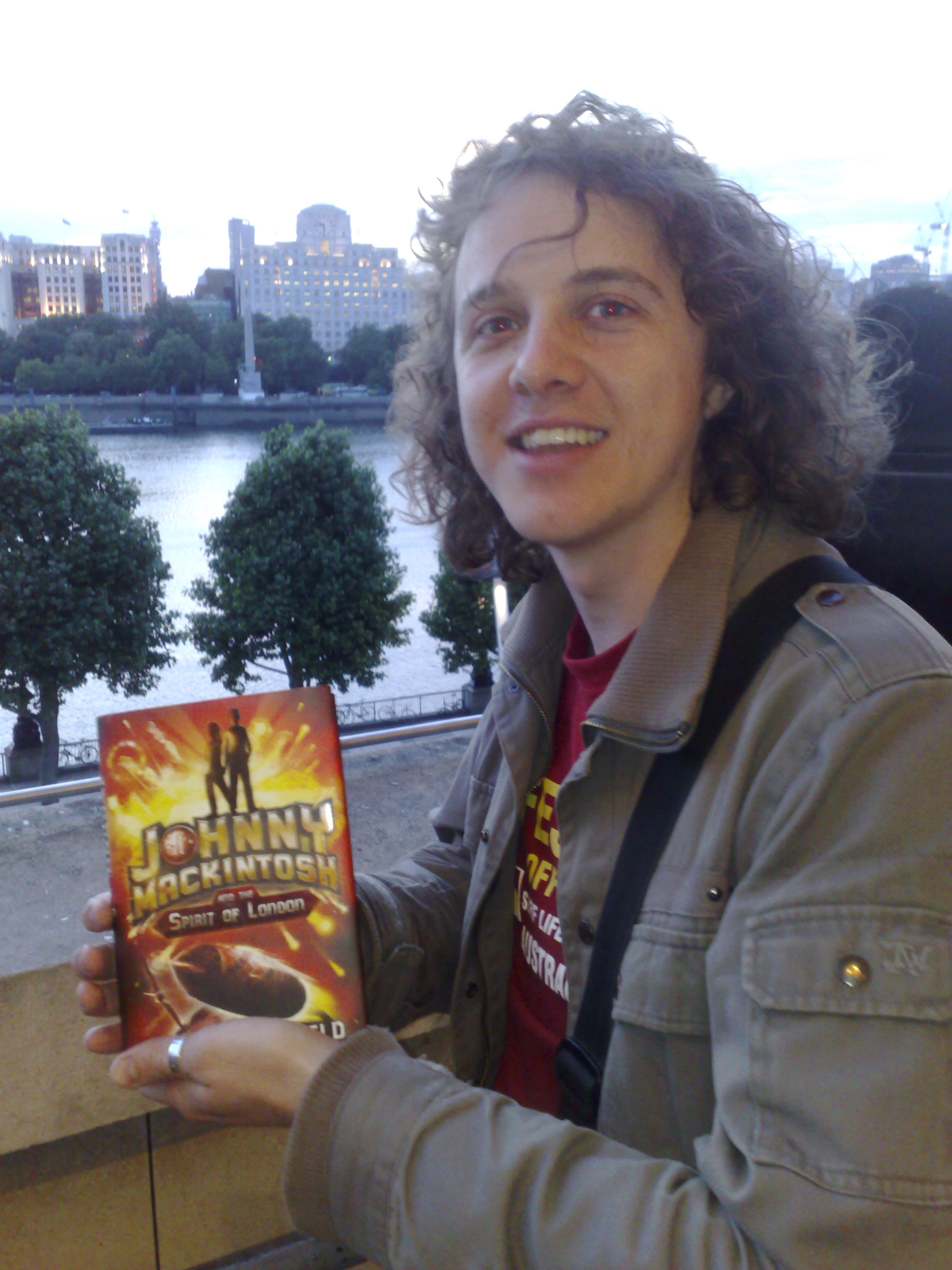
It’s Alex’s second book following on from The Mousehunteritself, but that only came out in January so he’s still quite new to all this too. And he was far too bashful to pose with a copy of one of his own creations in his hand so, instead, I had to snap him holding a copy of Johnny Mackintosh.
There are two things I’ve always wanted to be able to do, but know I’m totally rubbish at. One is singing, which is unfortunate for my friends as I have a terrible habit of breaking into song anyway. The other is drawing – Alex is a brilliant artist. When you’re a writer you can’t go anywhere without a notebook as you never know when that key idea is going to hit – plus you want to write in any spare moment. Alex showed me his notebook and it put my untidy scrawl to shame – beautiful drawing followed beautiful drawing and I’m shocked and appalled I didn’t take a photo to give a sneak preview. Happily, you can see all his brilliant mice and more over at the Mousehunter blog.
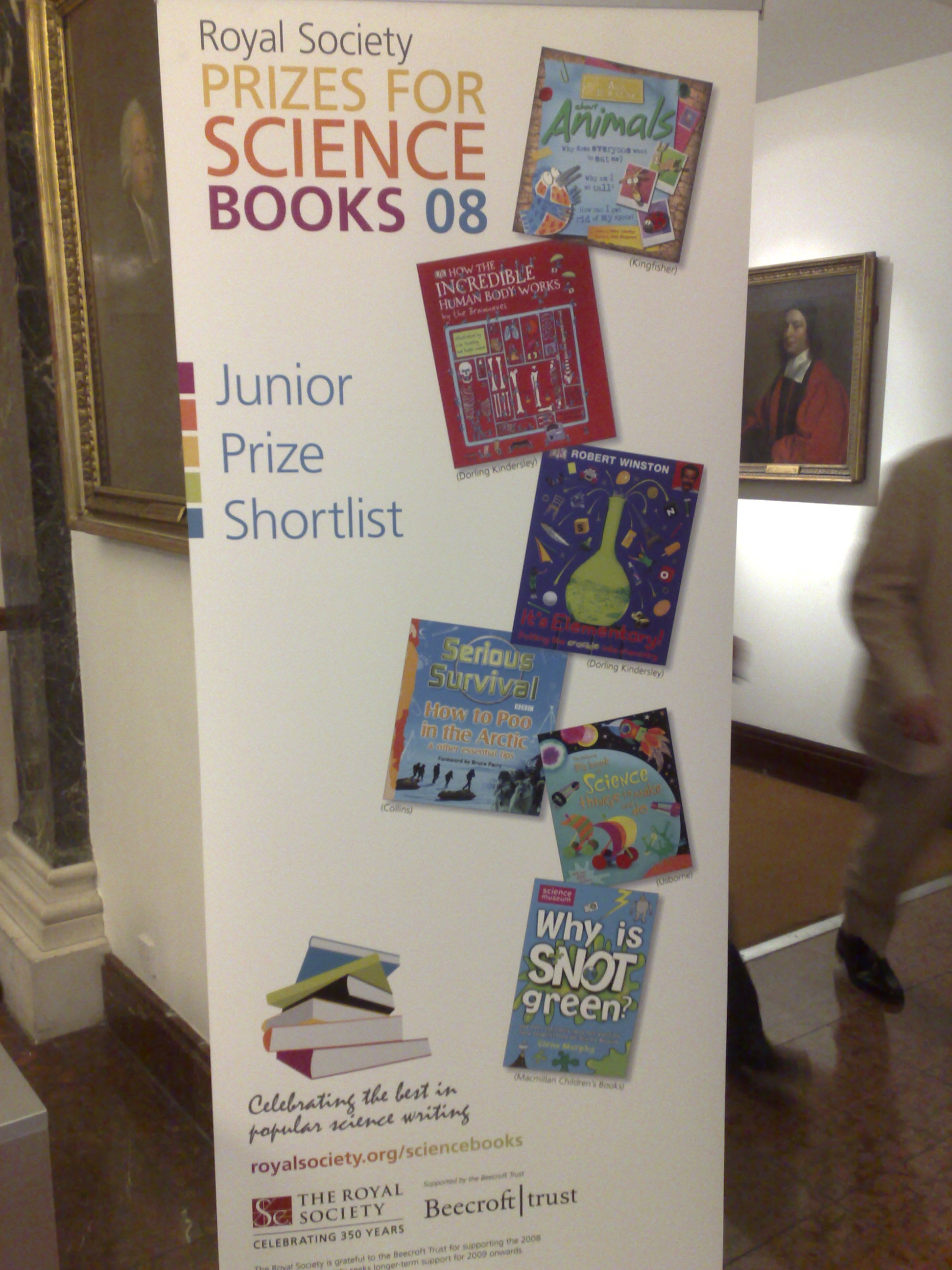
You might think Monday’s a quiet night when nothing much happens, but this evening I had invitations from Coldplay for their special gig at Brixton Academy and from the Royal Society for their Science Book Prize awards ceremony. Apologies to Chris Martin but there was only ever going to be one winner.
The Royal Society prize is probably the most prestigious in science writing (this year it was sponsored by the Beecroft Trust). It comes in two categories: there’s a general nonfiction award and a junior prize for books aimed at the under 14s. Up until now this has always been a nonfiction prize too, but I figure maybe, just maybe, Johnny Mackintosh will be considered next year for what I’d call its “science in fiction” content.
I chatted to Jon Tickle, ex of Big Brother and now of Brainiac Science Abuse fame, who was absolutely brilliant. Ditto Iain Stewart, like Jon, one of the judges who forgave me for mistaking him for Ian Stewart, one of the shortlisted authors. When I looked closely they both seemed to have two eyes.
The general prize was won by Mark Lynas with his Six Degrees: Our Future on a Hotter Planet. As the Earth warms a degree at a time, Mark describes the effect each will have on the planet and all our lives. I haven’t read the book, but I’m sure it’s a great contribution to the climate change area and from what I’ve heard it’s absolutelynot one of those hysterical “end of the world” prophecies. Apparently Lynas believes it’s neither too late nor too difficult to prevent possible future disaster. The only nominee I spoke with was Stuart Clark whose The Sun Kings didn’t quite make it over the line first, but who seemed a great bloke and certainly won the best-dressed author award on the night. His book tells an incredible story and has jumped to the top of my “to read” list.
The junior prize was won by The Big Book of Science Things To Make and Do by Rebecca Gilpin and Leonie Pratt. This was actually chosen by around 1200 kids from various organizations so I’m sure is a very worthy winner. My only disappointment was that this meant the winner’s speech didn’t answer the age-old conundrum of Why is Snot Green? which was one of the other books short-listed. For kids who want to know more about science, Planet Science is a great starting point and Nature is also doing a round up of best children’s books later in the year. Watch this space.
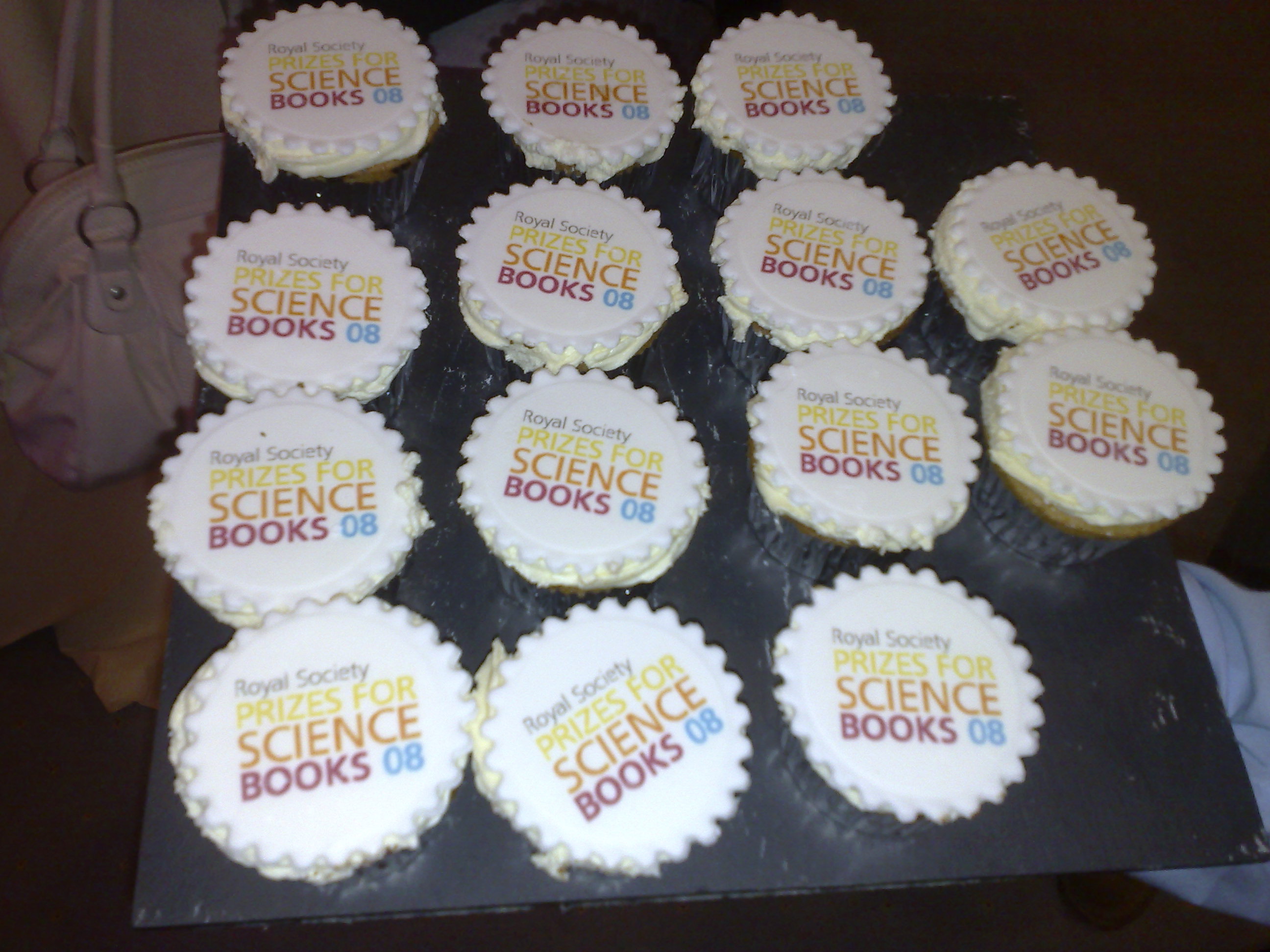
Martin Rees, President of the Royal Society and the main voice in the microphone, may not have sung Yellow, but you don’t get cakes at the Brixton Academy. These were totally delicious and must have put my own astronaut training programme back something rotten.
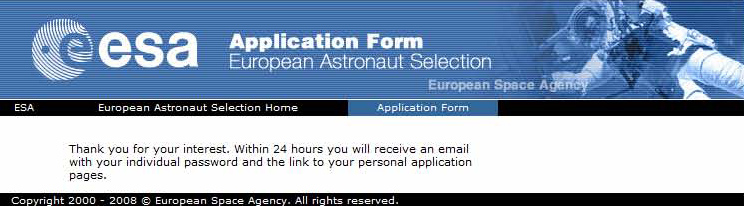
I’ve applied for some unusual jobs in my time, but nothing caps sending my completed form to the European Space Agency, in the hope of becoming an astronaut. Never have I been keener to be invited for interview.
It’s the first time since 1992 that ESA has opened up its doors to potential new recruits and I’m delighted to have the chance to become a candidate. Fewer than five hundred people have left the Earth to go into space and I can think of no greater privilege to be a representative of humanity as we take our first steps on what I hope will become a great adventure.
Our place in the universe thanks to Aeree Chung of Columbia University
There’s a vast galaxy out there, which is a tiny part of a mind-bogglingly enormous universe. What a waste if our species is confined, for a short time, to Earth before humanity ceases to exist.
Some people say that spending money on space exploration is a waste. To me the argument doesn’t stand up. Without going into space, we would know so much less about the changes the Earth is experiencing and would have even less idea of how to deal with them.
The space industry has also enabled better forecasting (helping to avert natural disasters or minimizing their effects when they occur), improved agricultural yields and more efficient exploitation of raw materials, vastly more efficient communications (bringing the world closer together which in turn has seen the flow of information across previously closed borders as well as connecting remote societies where other means are impossible), satellite navigation in planes, our cars and in many other devices, and the creation of new technologies and industries. And, in the longer term, without going into space the human race will inevitably become extinct. If we are to survive, to go on, we need to place our eggs in more than one basket.
Of course money spent on space exploration is spent on Earth anyway. It’s not as if it is frittered away on the surface of some other planet. It all goes to pay salaries and purchase materials here and now, and so is recycled into our economy.
I think, though, that there is another reason why space exploration is important. We are at our best as a species when we have a purpose, a goal to work towards. I find it incredible that we went to the Moon in the 1960s. And even stranger that no one has set foot on its surface for over thirty-five years. As Kennedy said:
“We choose to go to the moon in this decade and do the other things, not because they are easy, but because they are hard, because that goal will serve to organize and measure the best of our energies and skills, because that challenge is one that we’re willing to accept, one we are unwilling to postpone…”
All these years on, imagine what we could achieve if we set our minds to it? I was part of the generation inspired by the Moon landings. When people saw the fragile globe of the Earth from space, with no borders, it created a new outlook for humanity and the possibility of a bright shared future. My hope has always been that Johnny Mackintosh will help encourage a new generation of scientists and explorers to seize that future, to boldly go where no one has gone before. But how much more inspiring it will be when others, perhaps even me, are exploring space for real and the coming generations know they can become a part of that?
Unexpectedly, today has become one of those milestones every first-time author looks forward to – perhaps it’s even more special than publication.
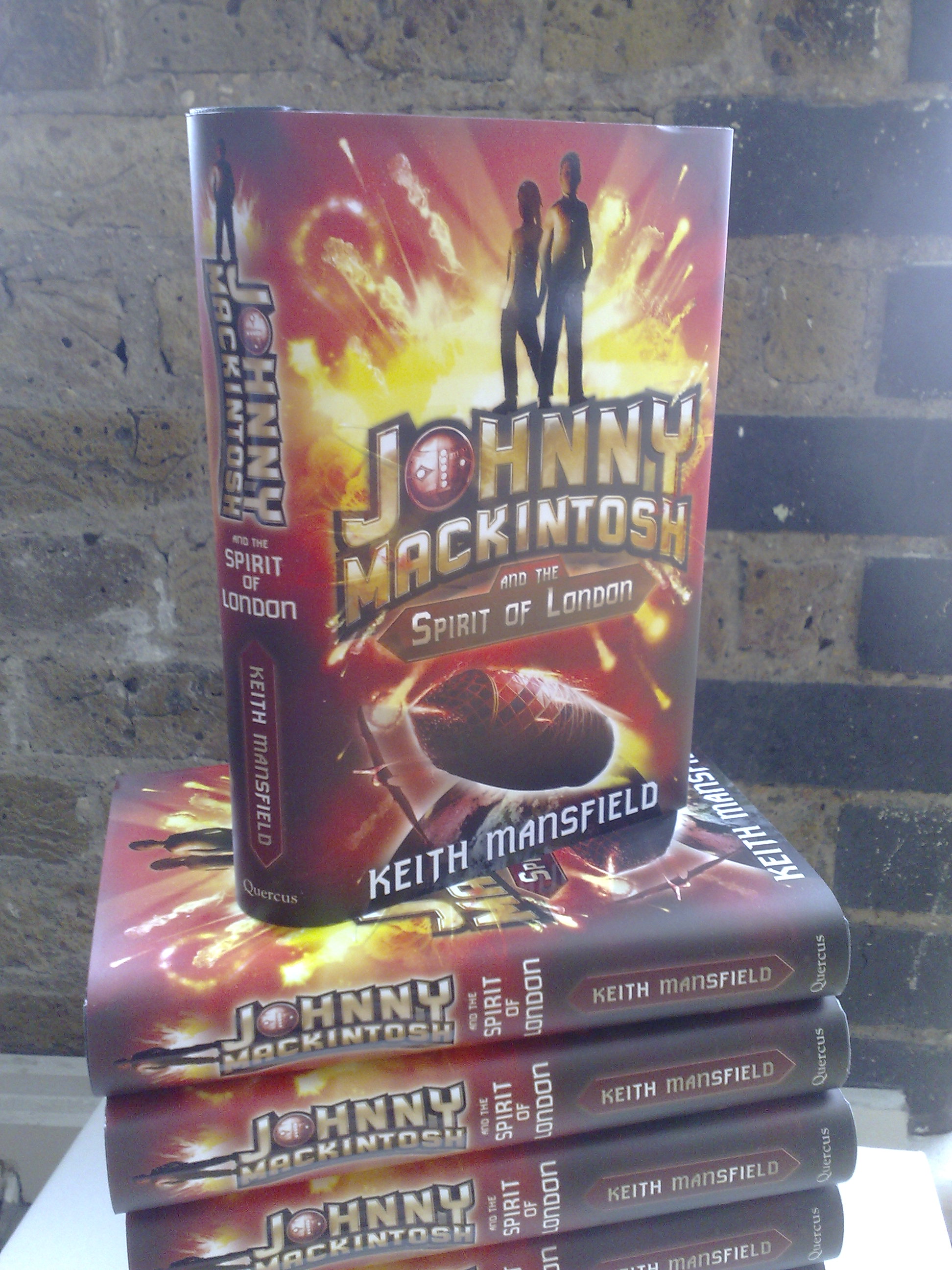
I am now looking at several advance copies of Johnny Mackintosh and the Spirit of London . . . and it’s gorgeous. When I embarked on this story I could not, in my wildest imaginings, have asked for better. It’s a privilege to be able to hold the physical book in my hands and see my words stretched across every page.
Everything has become so much more real and now I can look forward to publication with a mixture of excitement and apprehension that will vary depending on my mood. But if you’re going to write books, you do have to want people to read them so it’s the excitement that should gain the upper hand.
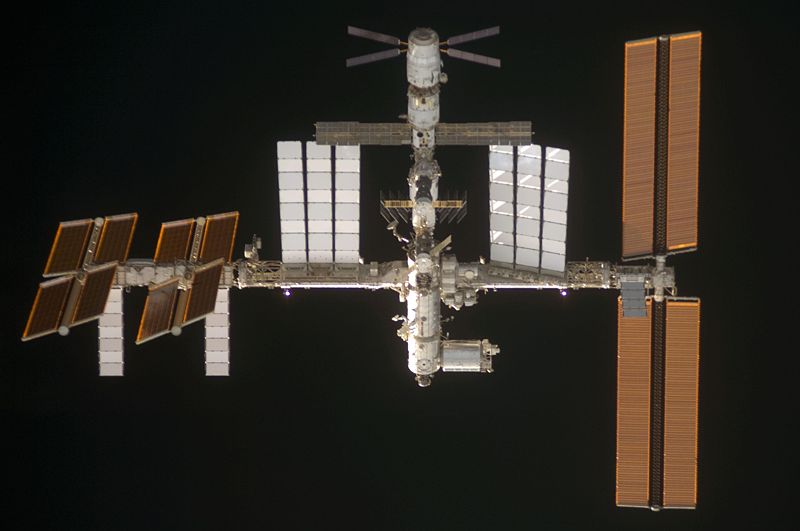
There’s an exercise bike in the corner of my writing room. Since I first considered applying to be an astronaut, I’ve covered 680 km, which turns out to be the distance to the International Space Station and back.
It’s certainly done the trick. Yesterday I had my medical to be able to apply to ESA (the European Space Agency) and I passed with flying colours. It means I’ve cleared the first (admittedly of several) hurdles in my quest to reach the International Space Station for real.
A terrible curse of being a story-teller is that (apparently) you view other people’s creations in a different way from everyone else. I’m forever being either told off for inadvertently ruining an ending or asked, when deconstructing a book/film/play, why I even contemplated the questions that led me to an early conclusion.
Yesterday I saw a preview of Alex Holdridge’s In Search of a Midnight Kiss at the Curzon Soho. Other than the Coen brothers’ No Country for Old Men, this was the first film I’ve seen for some years where I’ve totally misread the ending. I thought I had it pegged from a third of the way in, but in the final analysis the writing proved far braver than the Hollywood backdrop of the movie might have foreshadowed. But then this was downtown LA and not the glitz of Beverley Hills.
It wasn’t only the narrative. I sometimes write dialogue for a living (and was constantly having to fight the urge to include more in Johnny Mackintosh – the perceived wisdom is that kids don’t like dialogue-heavy books), but In Search of a Midnight Kiss had a script to die for and actors who carried it off. I was able to chat with Director Alex and actors Sara Simmonds (Vivian) and Robert Murphy (Jack when he wasn’t the cinematographer) afterwards – it turns out these guys gave been film-making together for several years. And it shows.
Their commitment to their art was evident, having nearly the whole team over to attend the preview (only on Screen 2 – come on Curzon!) and everyone was off to Paris on Friday to shoot the next project – on a deservedly slightly bigger budget, but promising to remain true to their movie-making principles.
My only gripe (and it’s a small one) was that the editing seemed slightly harsh, with occasional conversations referring back to something we weren’t privy to (or was I not paying attention?). At only ninety minutes, I could have happily sat through ten more for the bigger picture, but this was film-making on the edge, borrowing on credit cards and calling in favours because your work justifies it, and maybe they were simply lacking another few pieces of plastic to lengthen the final cut.
It’s black and white, laugh out loud funny from the very first moment, ultra cool but so very poignant at times. After the film, Sara repeated Vivian’s line about how everyone’s lives are hanging by a thread and you never know when it might snap – and the film mirrors the fragility in all of us.
What happens at the end? Of course my lips are sealed, apart from to say The Scorpions’ Winds of Change has always been a guilty pleasure of mine and I’ll never be able to listen top it in the same way again. If you want to find out, go and see the film. You won’t be disappointed.
Back in April I wrote a piece about Project Age Range, the Publishers Association plan to start putting recommended reading ages on the covers of children’s books. This week’s Bookseller sees a full-page ad taken out by a collection of children’s writers, illustrators and publishers opposing this initiative. Sadly, I suspect it’s too little too late to stop the juggernaut rolling.
I was invited to a presentation about this a few weeks ago. Basically, it’s got nothing to do with children. The PA did some research where they asked adults who don’t often buy books if they were likely to buy more as presents if they came with age guides on them. While the adults claimed they would, it sounded unlikely to me that this would make any difference to overall book buying in the UK. What it will do instead is to restrict the number of people who end up reading a particular title.
The No to Age Banding ad declares:
We are all agreed that the proposal to put an age-guidance figure on books for children is ill-conceived, damaging to the interests of young readers, and highly unlikely, despite the claims made by those publishers promoting the scheme, to make the slightest difference to sales.
We take this step to disavow publicly any connection with such age-guidance figures, and to state our passionately-held conviction that everything about a book should seek to welcome readers in and not keep them out.
Top of the list of authors who’ve signed up is Philip Pullman, followed by four Children’s Laureates at places 2 to 5. If you’re prepared to count down that far, my name appears at position 101.
I’ve had so many comments about this, universally negative, but the one that struck the strongest chord read:
Please no! My daughter is dyslexic, and at age ten, was still essentially illiterate. She wants to read, but finds it very hard. Even now, at nearly thirteen, she reads comics – sometimes. Mostly she doesn’t at all. In Year 1 (5-6 ages) she told me she wanted to die so she could come back and go to nursery school again. Imagine how bad she would have felt if the books had age ranges showing her once again how behind she was educationally?
If you want to sign up against specifying reading ages on books, then go here.
It’s happened sooner than I thought. Even if I do become an astronaut, Johnny Mackintosh is going to beat me by leaving the Earth first. His name is now included on the DVD that NASA is sending up with the Kepler Mission, the first space probe that should be able to detect Earth-sized planets beyond our solar system.
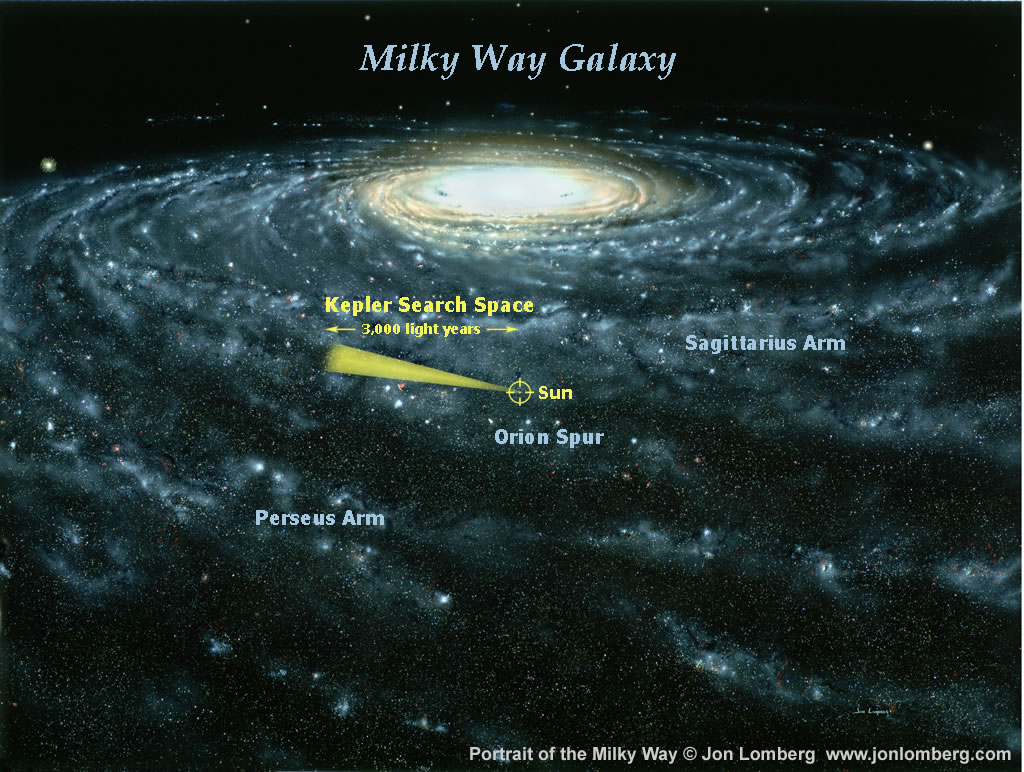
Kepler will orbit the Sun, simultaneously observing 100,000 nearby stars within a fairly narrow search beam (as shown in Jon Lomberg‘s illustration). Were it to orbit Earth, we’d sometimes be in the way. If a planet crosses the disk of one of the stars observed, the amount of light reaching Kepler from that star will marginally reduce. But for us to observe that happening, the plane of the planet’s orbit must match our line of sight. All things being equal, the chances of that (for a planet about the same size as Earth orbiting at roughly the same distance) turn out to be about 0.47% (which is 1 in 210). By dividing 100,000 by 210, this means we’d expect to observe around 480 Earth-like planets if there’s one around every star. Wow!
Here’s an animation from artist Donald Grahame showing Kepler in action, from it leaving Earth until it detects a planet, say 1000 light years away. There are more animations to view on the Kepler site.
Why not send your own name into space? The deadline is 1 November 2008 but there’s no time like the present. The Mission itself is due to launch in February 2009. As well as giving your name, there’s the chance to leave a message about the Kepler Mission. Perhaps, once entries close, you’ll all be able to read what Johnny’s written?
Imagine, in the far future, if a spaceship on a reconnaissance mission find a large telescope orbiting an ordinary star in an average solar system. They might salvage it and discover a disk onboard that uses optical storage technology. And when their scientists open the disk, they will find all our names – the far-sighted humans who wanted to look for sister planets across the Galaxy.
Landing area for Mars Phoenix probe (courtesy of NASA)
Missions to Mars have proved one of the trickier tasks in space exploration. To date, only 45% of probes we’ve sent to the red planet have arrived in one piece. Remember Beagle 2 with its Blur-composed call sign and Damien Hirst colour scheme? What might future Martians make of it as they try to piece together those multicoloured dots presumably now scattered around the landing site?
Beagle 2 wasn’t alone. In 1999 the Americans lost the Climate Orbiter and then the Mars Polar Lander. In future Johnny Mackintosh books I expect to reveal the real reason why some of the probes haven’t made it. NASA were so concerned that their 2001 Mars Surveyor Lander was cancelled as a result of previous failures but, like its classical namesake rising from the flames, the spacecraft was eventually taken out of mothballs and reborn as the Phoenix probe.
After a 423 million mile journey, Phoenix should land just after midnight on Sunday 26 May (British Summer Time). Unlike Beagle 2, which tried to cushion its impact with airbags, Phoenix fires true sci-fi style retro rockets, the last stage in slowing its speed down to only 5 mph. Right now, relative to us, the probe has reached 74,000 mph, but will hit the Martian atmosphere at only 14,000 mph because, in space travel, all speeds are relative (except the speed of light).
Phoenix reminds me of the Viking probes, two of which landed on Mars in the 1970s. The excitement of seeing the photos of the surface of another world, being slowly built up, was dissipated somewhat by the frustration of not being able to move around. Following on from the success of little Pathfinder, the rovers Spirit and Opportunity have been traversing the Martian surface for more than four years. It’s a sign of how far we’ve come that we’ll communicate with Phoenix via several of our spaceships now in orbit around the red planet, but it seems a shame that this new probe stays where it happens to land, especially now the technology has been proven.
Phoenix’s mission is to continue the search for water and also organic chemicals. For the organics, it repeats Viking’s methodology of digging up samples and putting them into a mass spectrometer, though the tools are nowadays much improved. For the water it has a decent digger to excavate a trench – the mission team says it doesn’t need to move around as we know where the Martian permafrost is. Let’s hope they’re right and the Phoenix doesn’t end up getting stuck on a rock.
For centuries people have speculated about finding life on Mars. Many think that finding it would be one of the greatest discoveries ever. However, Nick Bostrom, the Oxford-based futurist, hopes for humanity’s sake that there is no evidence. His argument is all tied up with something called the Fermi Paradox and wondering why we haven’t yet met ET.
Although Phoenix will look indirectly for signs of past life, its main purpose is to test out whether the red planet would be habitable for humans. For that we will need accessible water – we know liquid water once ran over the Martian surface. Now we want to see if there’s enough locked up in the polar ice caps for us to be able to colonize our neighbour.
In a few hundred years’ time I hope those Martian archeologists will find Beagle 2’s remains. But I also hope those same Martians will be our human descendants.
The thing about living around Brick Lane is that you’re always stumbling upon interesting things. Today, on the pavement, I found this unexpected piece of text from Monica Ali’s book:
Checking it out, Get London Reading is a biennial event sponsored by the Mayor (Boris seems a literary sort of chap so I’m sure he’ll keep it going) promoting reading in the capital. Sadly, it ran from 25 March through to the end of April, but if you visit the website there’s an interactive map showing the locations for various London-themed reads.
Naturally, I suggested they add Johnny Mackintosh and the Spirit of London, placing it at location EC3A 8BF (site of the Gherkin). But I’m sure the more votes it gets the better, so feel free to demand its inclusion (somewhere in that Wellington boot-shaped patch just below the “n” of “Houndsditch”).
When it runs again in two years’ time, will they let me give a reading in the space at the very top of 30 St Mary Axe?

 The 3rd July isn’t just an important day for Johnny Mackintosh and the Spirit of London. It’s also the day Alex Milway’s The Curse of Mousebeard hits all good bookshops. Writing can be a solitary profession so it was great to hook up with Alex the other night and swap stories and experiences as we head towards publication.
 There are two things I’ve always wanted to be able to do, but know I’m totally rubbish at. One is singing, which is unfortunate for my friends as I have a terrible habit of breaking into song anyway. The other is drawing – Alex is a brilliant artist. When you’re a writer you can’t go anywhere without a notebook as you never know when that key idea is going to hit – plus you want to write in any spare moment. Alex showed me his notebook and it put my untidy scrawl to shame – beautiful drawing followed beautiful drawing and I’m shocked and appalled I didn’t take a photo to give a sneak preview. Happily, you can see all his brilliant mice and more over at the Mousehunter blog.




 A terrible curse of being a story-teller is that (apparently) you view other people’s creations in a different way from everyone else. I’m forever being either told off for inadvertently ruining an ending or asked, when deconstructing a book/film/play, why I even contemplated the questions that led me to an early conclusion.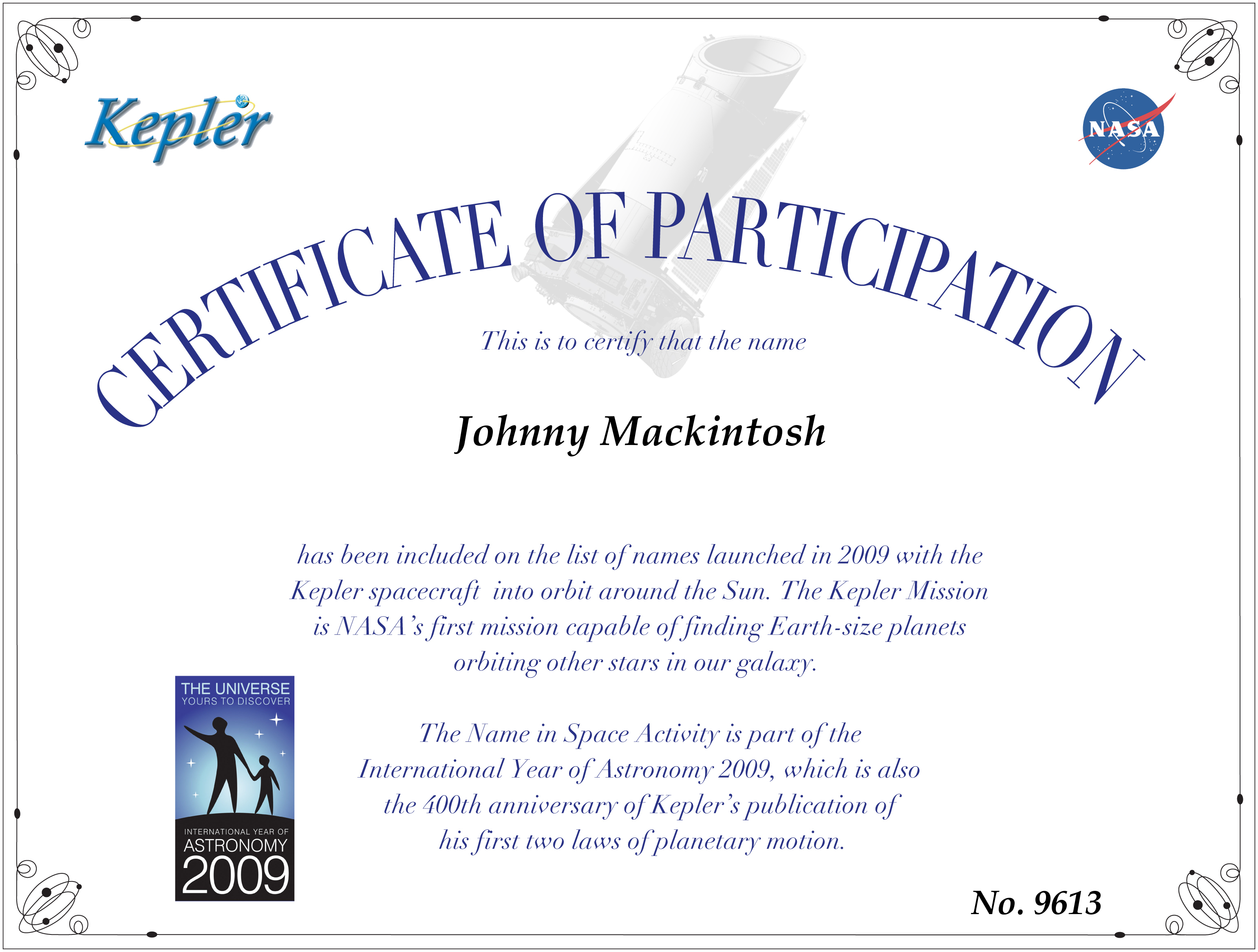

 After a 423 million mile journey, Phoenix should land just after midnight on Sunday 26 May (British Summer Time). Unlike Beagle 2, which tried to cushion its impact with airbags, Phoenix fires true sci-fi style retro rockets, the last stage in slowing its speed down to only 5 mph. Right now, relative to us, the probe has reached 74,000 mph, but will hit the Martian atmosphere at only 14,000 mph because, in space travel, all speeds are relative (except the speed of light).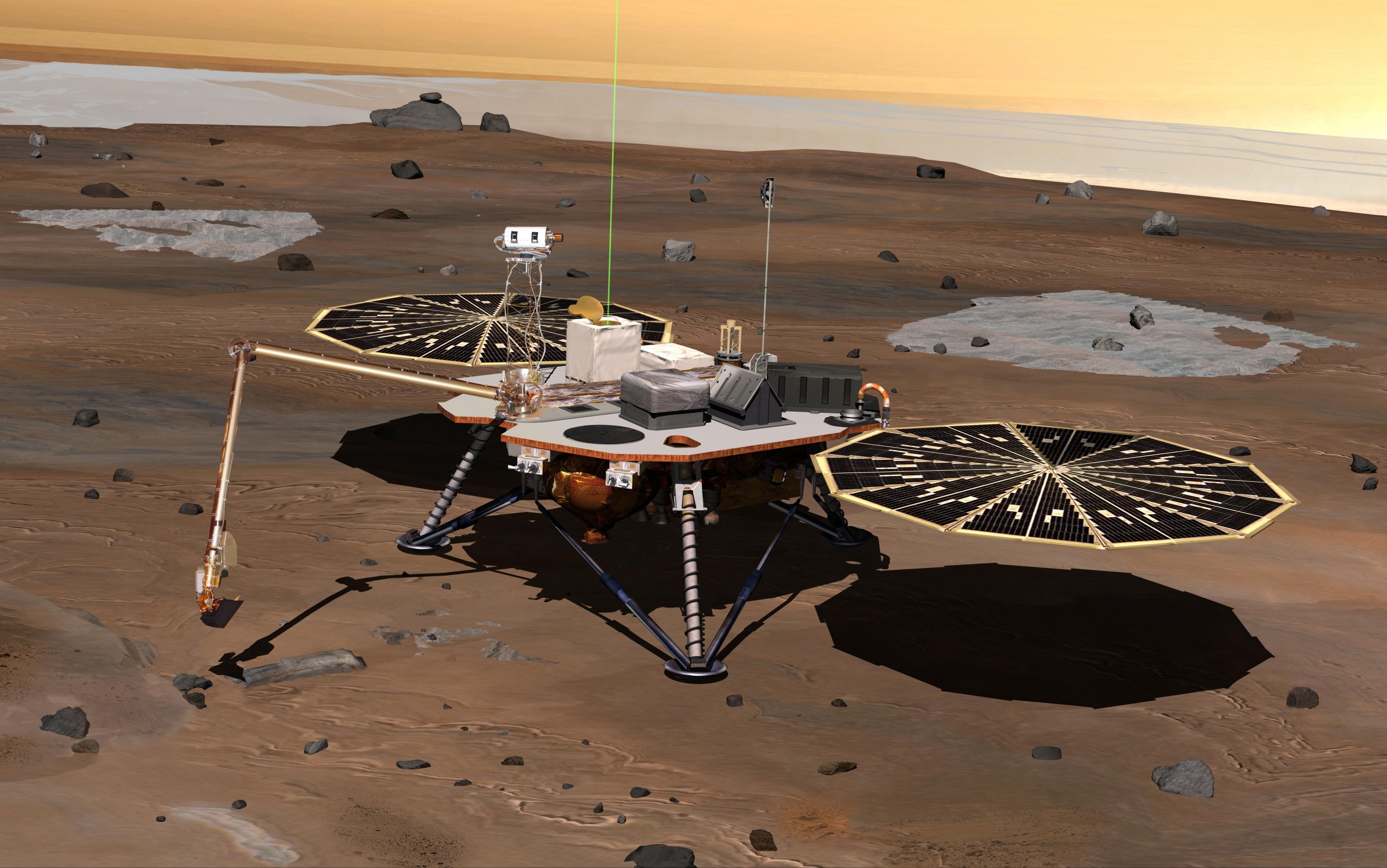


 Subscribe to Keith Mansfield's RSS feed


 Keith Mansfield