Some people have been amazed, and others disturbed, by what’s happening with AI – sometimes both at once. Around the time my book was published, a new tool came available from Google called NotebookLM (where the LM stands for Language Model, which is a term describing the family of generative AIs such as Chat-GPT, Gemini or Claude).
You can put the content of your book (or anything else) into its own notebook and it guarantees to keep it private, while also doing amazing things such as produce study guides, timelines and summaries. But the most mind-blowing of all is that it can also produce a podcast around the content.
And, as I keep saying to people, nothing stands still. The technology will only improve. Many people have been excited when I’ve shown them this and what a great tool NotebookLM can be, and have started using it for themselves. Others have been disquieted. I understand their trepidation, but as I say in the introduction to the book:
“the single, most important thing you can do to understand AI is to experiment, play, practise and perfect your own working with it. Don’t be afraid – dive in, glimpse the future and remain a part of it, instead of being left behind”
At the end of 2023, I was approached by an editor working for Hachette to write a book about artificial intelligence.
This was the first time I’d been asked to write a specific book rather than pitching it myself, but I was intrigued. The book was intended to be part of the relaunch for a series called “50 Ideas You Really Need to Know” and what Nicole Thomas, the editor in question, didn’t know was that I had edited and published the four first books in this series, back in the day – philosophy, physics, mathematics and management. I knew the series inside out, having defined it, so I thought “how hard can it be?”
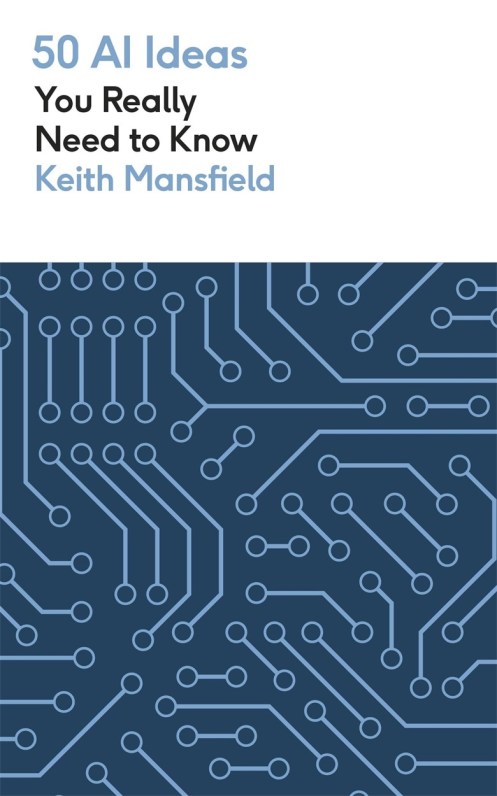
Writing books is hard. And now I look back, I recall my authors telling me how difficult it was to write these particular books because of their combination of breadth and depth. They were right, but in the end I am very proud of 50 AI Ideas You Really Need to Know. I even had a helping hand writing it, but more on that later.
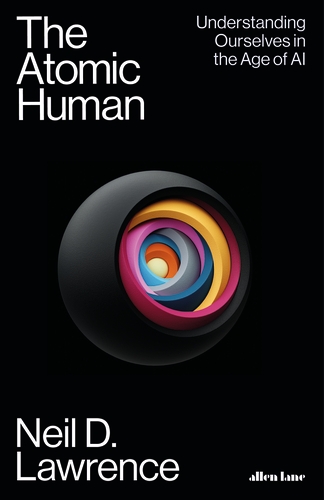
Nowadays I’m a full-time publisher at Penguin Press and I’ve also published two excellent AI books by other authors this year: Salman Khan’s Brave New Words and Neil Lawrence’s The Atomic Human.
Sal is the founder of Khan Academy with a mission to offer every child a free world class education, and with something like 150 million signed up using the service. When OpenAI was looking to release ChatGPT, Sam Altmann and Greg Brockman, the CEO and President of OpenAI respectively, approached Sal to offer him the next iteration, then GPT4, from which to create a positive use-case for generative AI as a personal tutor and teaching assistant. Pandora’s box had been opened, and Sal’s title is about embracing what’s good about it, rather than trying to slam the lid shut and ban school kids from using it. Instead we should adopt a policy of educated bravery.
I’d long thought Neil Lawrence was the most knowledgeable person I could find to write about AI, and he didn’t disappoint. Neil opens his incredible readable, storified book revealing a conjuring trick in which Yann LeCun and Mark Zuckerberg came together in rebranding machine learning as artificial intelligence – and the rest is history. Neil went on to be the Amazon Director of Machine Learning for three years, and is nowadays the DeepMind Professor of Machine Learning at Cambridge. He’s unusual having been at the coalface in industry and also the pinnacle of academia. His book is about the multifaceted nature of intelligence, and what makes us Human, that the machine can never take away. And, in his mind, why it’s misguided to talk about Superintelligence as a concept in which machines are vastly smarter than us, posing what’s called an “existential risk”, for that reason. Neil believes the nature of Human intelligence (and possible even our consciousness) comes from our constraints, not our abilities, because our intelligence is embodied. He thinks the biggest risk from AI is how it undermines our decision-making in the here and now – if we’ll let it.
I mention this rebranding because modern AI is the result of a machine learning technique known as neural nets, trying to emulate how the Human brain works – it was Alan Turing who first suggested we shouldn’t try to build a very intelligent computer, but rather should split the challenge into two: a computer capable of learning, and a means of training it. In the old days, good old-fashioned AI was instead much more about programming Human intelligence directly into machines, but that’s now been supplanted, but the name has remained and is what we think of as modern AI.
Back in the 1990s I published unfashionable but pioneering books on neural nets and machine learning from the likes of Donald Michie and Chris Bishop, before going on to publish more traditional AI textbooks in the noughties. But something that’s special about some books is how they can change the conversation – sometimes they can change the world.
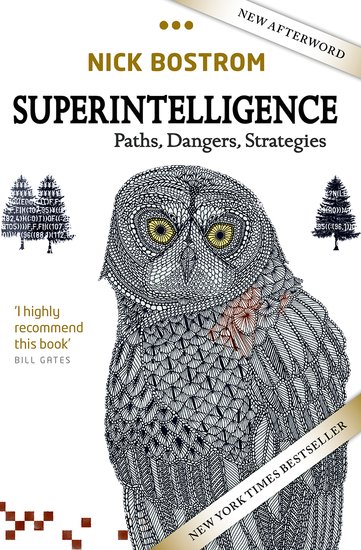
In 2014, I published Swedish thinker Nick Bostrom’s Superintelligence about how we were at risk of being the agents of our own demise. The basic premise, that we’re not the fastest animals, or the strongest, or the ones with the sharpest teeth or claws, but Humans dominate the world because we have the best brains. And what happens when we invent brains more powerful than ours, and they invent better brains still, and there’s an “intelligence explosion” that leaves us far behind? And it’s not that this superintelligence might want to eliminate its creators – rather that our fate would be largely irrelevant to it. Just as no Humans actively want gorillas to go extinct, but their fate is in our hands and we’re not doing much to prevent this happening because we have bigger priorities.
Books can change conversations, or start new ones. Elon Musk tweeted about Nick’s book, and he and Bill Gates publicly discussed it – and it became a New York Times bestseller. The field of “AI safety” went overnight from being a fringe subject hardly anyone even knew existed, into the global mainstream. Elon is the person who (along with Nick and perhaps even me) thinks most about the future of Humanity, and securing this, so he organized for a new open-source vision for AI – by setting up OpenAI. Which ultimately led to the generative AI revolution we see today.
In the meanwhile, in 2019 I was approached by an American publisher BenBella to see if I would edit a book on AI authored by the then co-lead of artificial intelligence in the US Air Force, Michael Kanaan. Mike’s book T-Minus AI is a great story of what AI is and how it came about, and was published just as the new era was beginning to unfold. OpenAI had been developing a Google invention called a transformer through which AI seemed to be genuinely creative for the first time. It was such a shocking development that OpenAI felt unable to publicly release the software, which they called GPT-2, in case it fell into the wrong hands.
However, Mike was allowed access and used it to write a final paragraph of his book. On just the second attempt, his 43-word prompt produced an AI-written paragraph of 77 words that blew our minds. I wonder if it was the first time AI had contributed to a book in this way.
The world has shifted, and Humans quickly acclimatise – it’s one of our strengths. With my own 50 AI Ideas You Really Need to Know I always had in mind that I should give AI a voice and have it write the final chapter – the 50th idea, which is entitled “The View from AI”. But writing an entire chapter is quite a leap from writing a single paragraph. Over the months of writing my other chapters, I would sometimes have ideas for what I hoped the AI would discuss, so I’d jot them down into a growing prompt for when the day finally came. The first sentence of 50 AI Ideas reads:
“By now, probably all of you reading this book will have experienced having a conversation with a computer, and feeling as if you are understood”
Creative AIs are known as “large language models” and the particular model I wanted to use for this task was Anthropic’s Claude Sonnet. To began our conversation, I explained what I wanted it to do, and it asked some basic questions around word count and tone. There’s a fun text feature in the book of standalone boxes that discuss a self-contained topic of interest, relating to the main theme but which can be read on their own. Claude wondered if I wanted to tell it what to write about in the box, or if it should choose a topic of its own. I was too busy, running up against my publisher’s deadline, so I simply told it to pick something it thought would be interesting.
The first attempt was impressive, but failed in a way AI often still does by being far too vague and generic. I wanted this final chapter to be useful, and have specific insights that would be useful to readers, so I asked it to try again on that basis. The second attempt was far more detailed, but came with the problem of having far too much text, that would never fit in the space provided. I wondered about editing it down myself, but that would be time-consuming and would turn the AI’s words more into my own. Thinking it was a tough ask, I requested a third attempt to keep the specifics but stick to the original word count. And that, entirely unedited on my part, is what appears in the final book. I feel it’s quite mind-blowing, but I also know AI will only get better.
I also felt seen. Readers of this site or my followers on social media generally, will know me as a space-geek. But there was no reason for the AI to know that. There was nothing in my prompt that talked about space. But there, in the standalone text box in front of me, AI had chosen to address the Fermi paradox – the mysterious apparent absence of alien intelligence in the Universe. And how and why AI might assist in the search for it.
Later, when discussing this with Nick Bostrom, he said “it used at least to be a rule I noticed that every conversation with an interesting person eventually would bring up the Fermi Paradox”. I think it’s a deep insight we might now consider AI to be an interesting person.
The book was published in September 2024, and I hope you all enjoy it. There wasn’t room for me to publicly acknowledge the inspiration of all the authors I’ve worked with over the years, so I do that here.
The lovely people of the European Space Agency (ESA) and the Norwegian Space Centre (NOSA or Norsk Romsenter) have invited me to Tromsø in the Arctic Circle to learn more about the aurora and go on nightly expeditions to see the northern lights. I feel very privileged and fortunate. I’m joining 29 others from around the world who ESA have termed the Aurora Hunters.
Here’s an ESA video of the view from the International Space Station.
Of course I’d love to see the aurora from there, but you do have to pay your travel costs to go on this expedition, and that probably makes it prohibitive. I have been to Iceland aurora hunting before, but only caught the faintest glimpse, but then was woken on a translatlantic flight (always book the polar-facing window seat) for a dancing green light show, but I’m sure that’s as nothing compared with what awaits in a couple of weeks. The idea of the expedition is to learn more and then spread the wonder, beauty and understanding of this glorious natural light show wider.
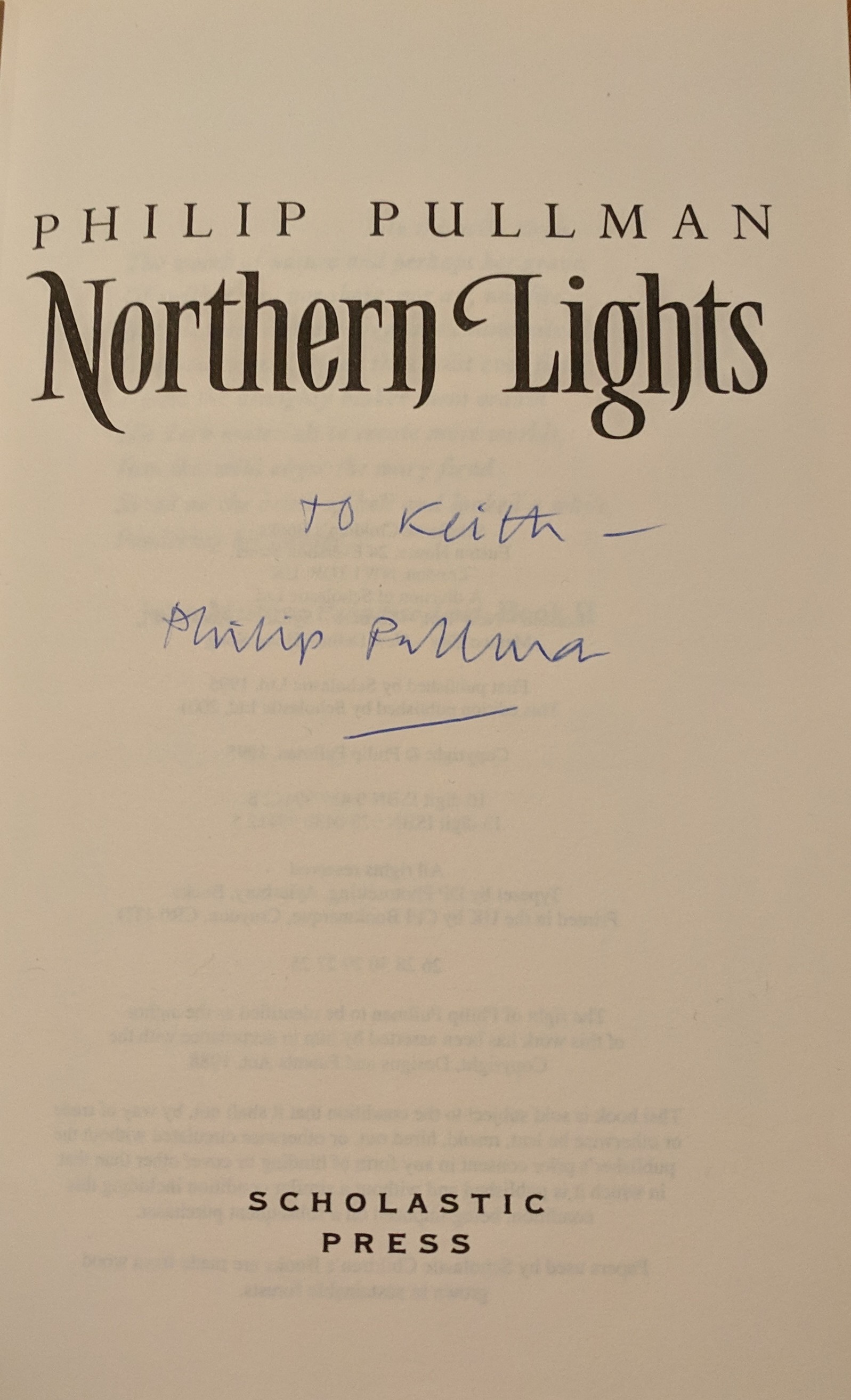
I couldn’t help think of Philip Pullman’s first book in the His Dark Materials series which was called Northern Lights in the UK before being rebranded The Golden Compass for the American market and then the movie. Lord Asriel and ultimately Lyra discover that the aurora is a bridge to other parallel worlds, and then bravely venture across. Of course Lyra is helped by an armoured bear – I’ll have to check before I head off whether I’m likely to encounter any polar bears too (with or without extra protection forged from meteorite iron).
On a more serious scientific front, the aurora is an indication of Earth’s magnetic field protecting us from the bombardment of solar storms, funnelling charged particles towards both poles (in the southern hemisphere they’re known as the aurora Australis). The colour is an indication of the chemicals involved with the most common green colouring (visible in the banner on this website) indicative of mainly oxygen.
The Sun which lives for billions of years has a heartbeat of 11 years, during which sunspot activity waxes and wanes. Sunspot activity correlates with aurora, and we’re coming towards the end of the latest recorded maxima (the 25th) meaning there should still be a decent chance of seeing this wonder of the natural world in amazing circumstances.
I’ll post more about it, especially on Twitter, but if you want to know more Stuart Clark’s excellent book The Sun Kings is a terrific read.
Curiously, after yesterday’s events in Florida, a message seemingly from the far future slipped through a wormhole in the space-time continuum and just happened to appear in the ether here at Mansfield Towers. Other than trying to convert it into present-day English, I have left it untouched.
From: First Citizen Michelle (human)
To: All humans & interested AIs
Location: Proxima B, Antigone Moonbase
Date: March 30, 2267 (Mars Standard Calendar)
Fellow citizens
Five years ago we reached our new home. Proxima Centauri and the worlds around this dwarf star is the first permanent outpost for humanity beyond the Sol system. The journey was long and hard. The loss of Tomasz and Antigone hurt us almost more than we could bear, but here we are celebrating this small milestone. We are 50,000 new minds, many organic, some not, in a new star system.
While we await the return signal from our home planet of Mars, we have been busy. This magical system has been extensively explored and the Dyson sphere nearly completed to power this staging post from which we expect to soon be able to take another step even further out. While there are many wonders, as expected (though we still hoped otherwise), there was no life here, just as none was to be found on any of the worlds (large and small) of the Sol system. This reinforces us, strengthens our determination, to spread the wonder that life brings, whether organic, machine-based or some mixture of the two, throughout our Galaxy and beyond. Each step we take teaches us more about how precious life and intelligence are.
It is worth noting that this voyage of exploration and discovery, the way we are now wading out into the waters of the cosmic ocean, would not have been possible without an event that happened 250 years ago today, according to the Standard Calendar. And it occurred not on our homeworld, but on (and above) Earth, the original cradle of humanity – before runaway climate change and the subsequent nuclear conflicts made the third planet uninhabitable.
Many think of Elon Musk as the original First Citizen of Mars, and it is true that he was pivotal in engineering the systems later humans and AIs came to rely on, but Musk originated on Earth when it was still viable and, in fact, at a time before humanity had begun to spread across the system. It is hard to believe now, but although humans had visited Earth’s satellite, Luna, almost 50 standard years before, they had not returned and the few rockets they launched were only ever used once, incredibly being left to fall back to the planet to be destroyed after completing their initial mission.
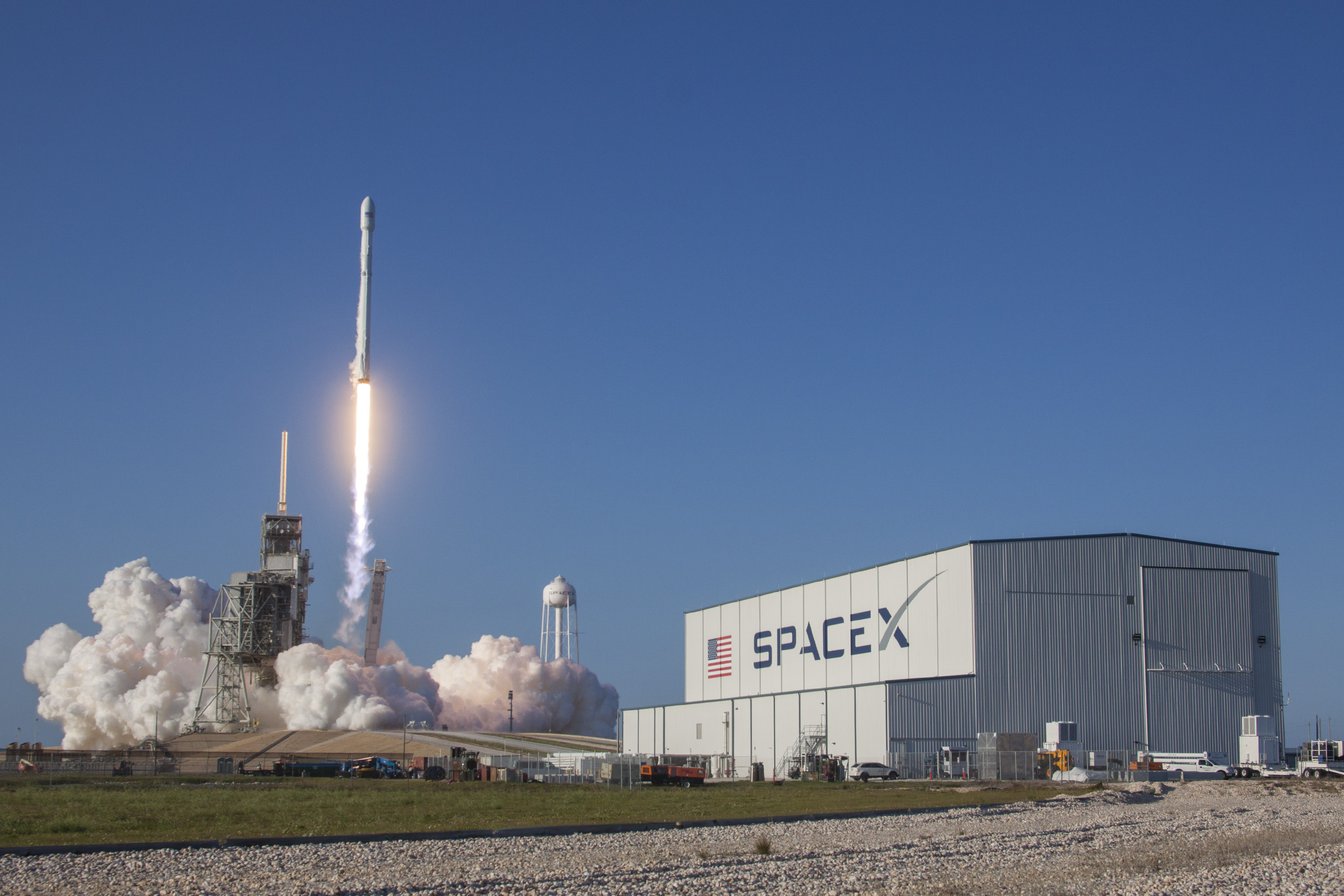
I am grateful to the AI, No Compromise, No Surrender, for discovering some incredible footage of a youthful pre-Neuralinked Musk. It is captioned “CEO & Lead Designer, SpaceX”, roughly analogous, I believe, to First Worker. Until this time the cost of reaching space from such a deep gravity well was almost prohibitive, making it the province of nation states (Earth never achieved a planetary-wide government) rather than corporations or individuals. But then Musk founded the cooperative called SpaceX, which succeeded against incredible odds to build the initial colonial fleet that reached Mars in 2036. But those early Mars voyages were long after the fifteen-year struggle to create reusable orbital rockets that would eventually reduce the cost of access to space to a fraction of what it had been before.
So it was that on March 30th, 2017, the very first used orbital class rocket (called a Falcon 9 because of its 9 primitive chemical engines) successfully relaunched, carrying with it a communications satellite destined for geostationary orbit, before landing on a floating platform named Of Course I Still Love You which had been positioned in one of Earth’s oceans. While the very idea of chemical rockets has long since been consigned to history, the name of the platform brings a smile to my face. Just as we organic humans have tried to build a Culture-style civilization in collaboration with the mighty AI Minds of our ships and cities, the literature of the great Iain Banks inspired Musk and his followers in the distant past.
The mission on that fateful day, apparently named SES10 after the satellite launched, would pave the way for a transformation of human fortunes. For a Standard Calendar century, Earthlings had flown around their planet in vessels that were seemingly reused thousands of times, without being discarded. Yet they were so very slow to attempt this same principle to go beyond the planet. Only when SpaceX made reusable rockets the norm, could the Mars colonization project eventually be realized.
It was not long before turnaround times dropped to a Standard Calendar day people switched to preferring launches on flight-proven rockets rather than than untried new builds. In this era of mighty fusion engines powering hollowed out asteroids to the stars at relativistic speeds, controlled by Minds that are far beyond human comprehension (albeit in welcome cooperation), it would be a mistake to belittle the achievements of a small group of engineers who created a chemical rocket that would fly reliably multiple times.
Without them, our ancestors would not have left Earth in time. Without them, life would not now be spreading through the cosmos. The recovered footage is only a two-dimensional low-resolution projection, but all of us should take a moment to witness it and remember the pioneers who have made this wonderful future possible. We owe them a great deal.
Today, 6th October, is apparently National Poetry Day in the UK.
When young and a keen writer, of course I penned poetry, but I was also a poetic soul. So it was that when I graduated from university I embarked upon a wonderful railway journey for a month across Europe, before arriving at Istanbul in Turkey. And then I spent another month, hitchhiking around Turkey, going far east into Kurdistan but also seeking out some of the great cities of the ancient world.
It was my intention to visit Hisarlik, south of the Dardanelles Strait and close to Pergamon, and now known to be home to the once-mythical city of Troy. For on my travels I had taken with my a copy of Tennyson’s great poem Ulysses that I memmorized during the journey so that I could declaim it across the Trojan battlefield:
My tribute to the romantic world of the ancients and a time when men consorted with gods.
Today I find poetry is like the song lyrics I picked up in my youth. Neither can be unlearnt. My memory may sometimes appear too full to learn new things, yet these old treasures remain. Which is appropriate because Ulysses is of course a poem about aging, and also about wanting to strive to continue the great things that before had come so easily to us. The lines:
Come, my friends,
‘T is not too late to seek a newer world.
Push off, and sitting well in order smite
The sounding furrows; for my purpose holds
To sail beyond the sunset, and the baths
Of all the western stars, until I die.
connect me to my previous post about Elon Musk’s plan to colonize Mars, wondering if that will be an epic journey I may make in my lifetime. And if I do I imagine it will be the last great journey (though how I want to visit Saturn too!).
To test myself and the power of memory, I just recorded the poem. I hope you enjoy this national poety day treat. Click the link at the top of the post or listen to it here.
Later today, at the International Aeronautical Conference in Guadalajara, Mexico, something incredible will happen. Elon Musk, the CEO of SpaceX (and Tesla) is giving a keynote talk entitled “Making Humans a Multiplanetary Species”. I like to see it as the dawning of a new era for our species.
The talk is going to be streamed live so for those of us not fortunate enough to be in the hall we can watch it at:
The timing will be:
Local (Mexican) time: 13.30-14.30
British Summer Time: 19.30-20.30
Eastern Daylight Time: 14.30-15.30
And so on…
It will sound like science fiction, but it is not. Those who think the future of space exploration still belongs to countries and national space agencies may expect NASA to reach one of Mars’ moons (as that’s so much easier) around 2040. Elon Musk is aiming to send the first humans in the middle of the next decade.
His Red Dragon astronaut capsule is aiming to go as early as 2018 and from then on, in the launch window that occurs every 26 months, more missions will follow. Those of us following the mission have been anticipating the official announcement of the Mars Colonial Transporter, designed to take 100 people at a time to the red planet. Musk teased us last week that the vessel needs a new name as it will actually be able to go much further.
Turns out MCT can go well beyond Mars, so will need a new name…
This blog post is the first “official” announcement that I am writing a book about Musk’s plans for Mars called The Real Martian explaining the rationale for accelerating the human colonization of space and SpaceX’s specific plans for making this happen.
This is no Apollo Programme doing it for the prestige – to be first. The aim is to create a self-sustaining human civilization on another world. By the end of the century the plan will be for a million people to live there. The space race is shifting from governments to private corporations. Musk’s SpaceX is joined by Jeff Bezos’ (the founder of Amazon’s) Blue Origin and also by Robert Bigelow’s aerospace company (which has a trial inflatable habitat currently attached to the International Space Station).
However, it’s important to realize that the entire purpose of SpaceX has been to create a colony on Mars. People know it for the Dragon craft that supplies the International Space Station and the incredible rockets that launch satellites and then land back down on a barge in the ocean. But they may not have grasped that the reason for vertical landing rockets with their retro thrusters is because that’s the only way to land safely on Mars.
The space shuttle used to glide back from orbit but still needed the longhest runway on Earth to land safely; Mars’ atmosphere simply isn’t thick enough to contemplate such a strategy, so new Mars-specific technologies had to be invented. We’re used to other capsules splashing down in the oceans or, Tim Peake-style, hitting the Kazakh Steppes pretty hard. The new Dragon capsule that will take astronauts to the space station next year is designed to land anywhere in the solar system, whether that’s the White House lawn or a Martian plateau.
Finally, we are living in the future. It’s becoming oh so exciting and I hope everyone, like me, wants to hang on for the ride.
This month over at The Prime Writers website we’re imagining who would appear in the film adaptation of our books. Today was my turn to cast the movie of Johnny Mackintosh and the Spirit of London, which in turn has got me thinking about the tricky business of adapting books into screenplays.
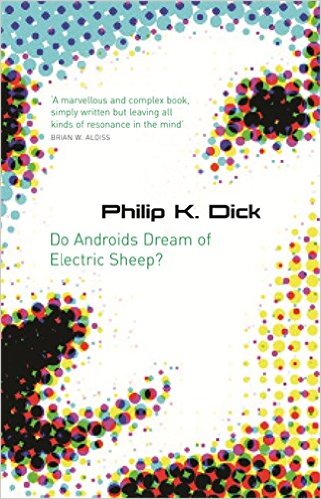
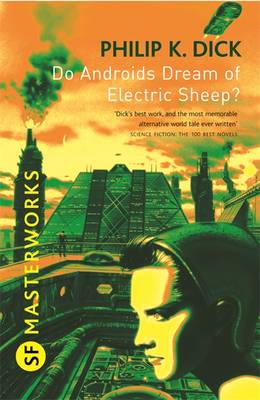
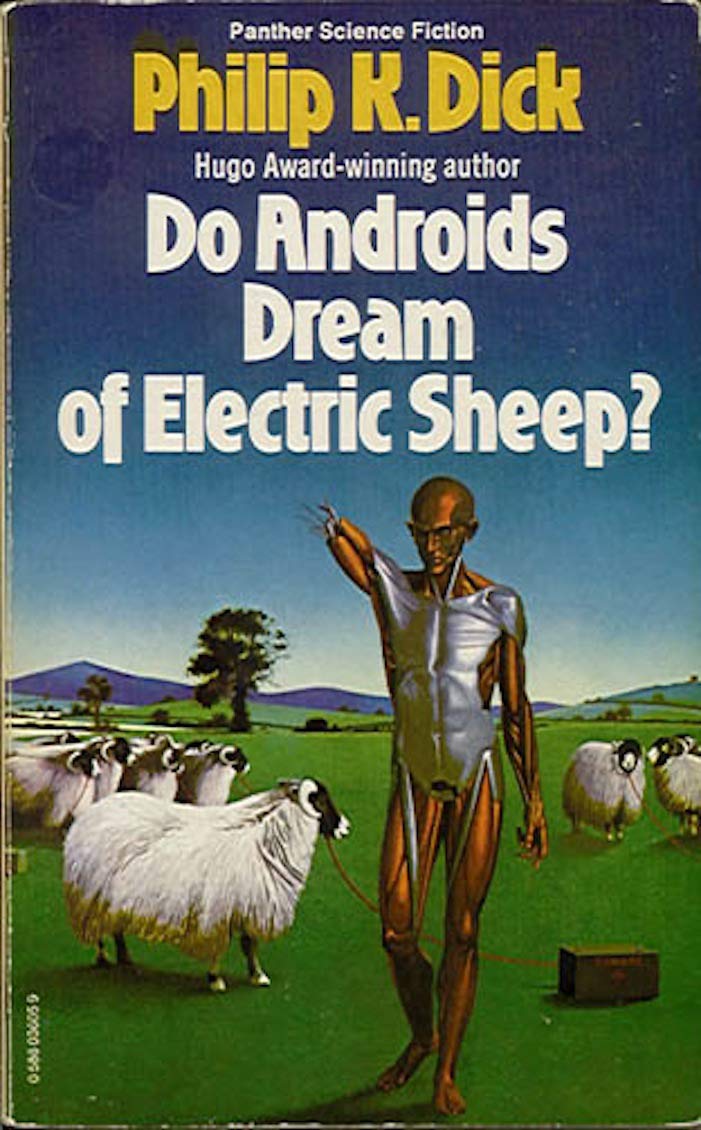
How many movies do you think are better than the books they were taken from? As authors and book lovers we may be biased, but most people count the number on the fingers of one hand. There are doubtless more but as I begin this piece, I can count that number on one finger. The film that springs to mind is Blade Runner, adapted by Hampton Fancher and David Peoples from Philip K. Dick’s novel, Do Androids Dream of Electric Sheep? (which comes in myriad interesting covers).
Many films have been inspired by Dick’s work, for example: Minority Report, Total Recall, The Adjustment Bureau, Paycheck, Screamers, A Scanner Darkly. It’s only the last of those that, like Blade Runner, was based on a novel. All of the others were inspired by short stories. When I first discovered Do Androids Dream of Electric Sheep? I realized the film was almost unrecognizable from the book. It’s a while since I read it, but my recollection involves elements such as parallel universes, a pet sheep, a very strange religious cult, and a wife for Blade Runner Deckard The genius of the adapted screenplay was to cut out everything except for one thread of the story and build the film around that.
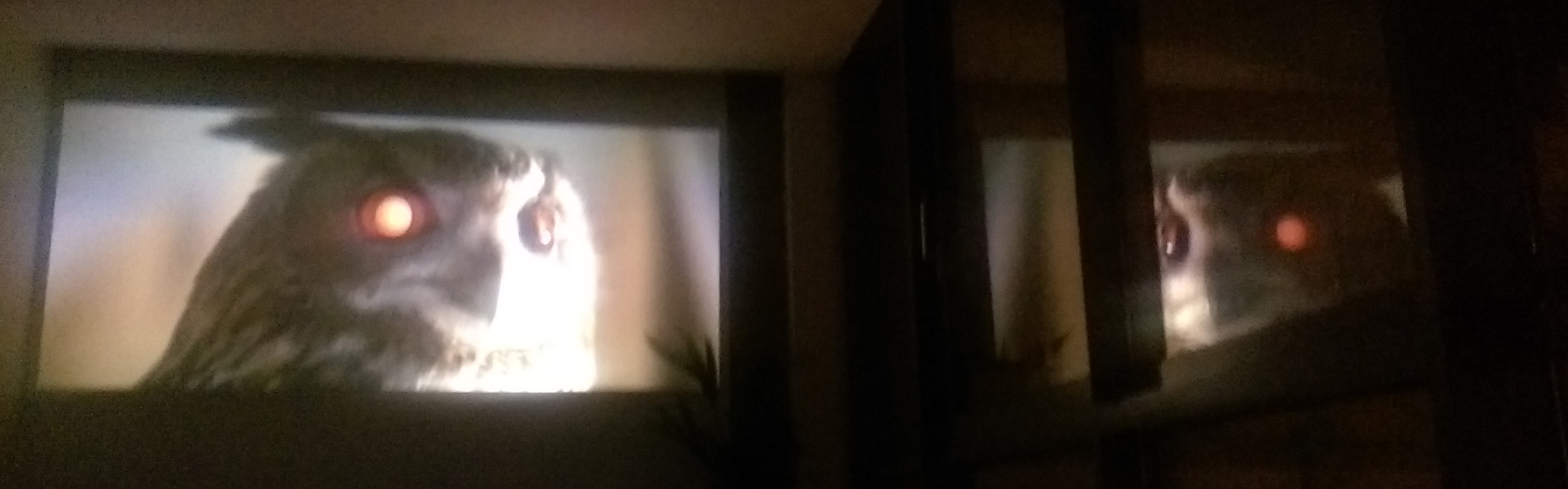
Watching Blade Runner projected across the entire wall of an apartment
The depth of the book enriches the world of the film. The owl at Tyrell Corporation and the snake used by replicant dancer Zhora are both artificial because in the book there’s been a devastating nuclear war and almost all animal life on Earth has disappeared. “A new life awaits you in the Off-world colonies. A chance to begin again in a golden land of opportunity and adventure” for exactly the same reason, with J.F. Sebastian alone in his apartment block unable to follow his neighbours because he failed the medical.
The biggest difference between book and film is the depth of a novel that a film simply doesn’t have time for. A book can afford to meander and sometimes disappear into cul de sacs. A movie gets straight to the point. And the perceived wisdom is that it does so in three acts. If writing a film script, perhaps trying to adapt your own novel, here are some things to bear in mind.
1 page of (properly formatted) script equates to 1 minute of screen time
If you’re a new writer hoping to break into Hollywood, your script should be 110-120 pages long (and NO LONGER). If making a European indie you can get away with 90-120 pages.
Act 1 covers pages 1-30 and introduces all your characters, before a key plot point pretty much exactly on p. 30 takes us into Act 2. After you’ve got to know your key characters in the first 10 minutes of the film (first 10 pages) there’s an Inciting Incident that sends them out of their comfort zone and into the meat of the movie.
Act 2 is all about overcoming obstacles as your characters battle through the story. On 60 minutes, 60 pages into your screenplay, is the point of no return where some sort of decision is made from which there’s no going back. The remainder of the movie is set in motion. At the end of Act 2 at around 90 minutes is another key turning point of the plot.
Act 3 is all climax, ratcheting the stakes up higher and higher until you finally reach your ending.
There are a million different ways to write and book, and for many authors the story is unplanned at the outset. Even Philip Pullman, President of the Society of Authors, told me he doesn’t plan his books but is from the school of discovering the story as he goes along. The difference in film is that every scene has to move the story on towards the ending (or it will be removed!). The ending has to be the starting point for every screenplay.
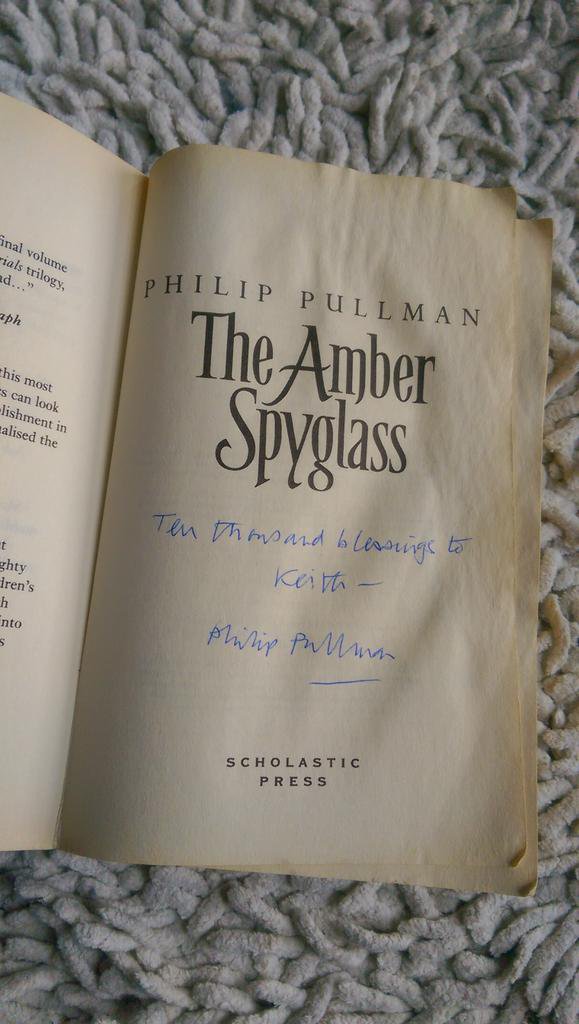
A gratuitous image of one of my Pullman dedications
If you’re ever in the fortunate position of finding yourself pitching a script to Hollywood movie moguls, they may well ask you on what page is your inciting incident and which pages introduce your protagonist and antagonist. Be ready with your answers.
In a room with Spielberg but not close enough to pitch!
When I first began writing books I didn’t know much about literary structures, being a mathematical physicist by training but having stumbled into the role of book publisher at the British Film Institute. My first novel, Johnny Mackintosh and the Spirit of London had one rule, of ending each chapter with a cliffhanger. I see now there was an inciting incident on page 2 but there’s so much going on I think any adaptation would work better as long-form TV drama than a movie.
But the novel I’m working on at the moment, a science fiction story for grownups built around parallel realities and the mysterious absence of aliens in the universe, borrows hugely from the three-act structure of the film world. Hoping it might make the transition from printed page to big screen just a little bit easier.
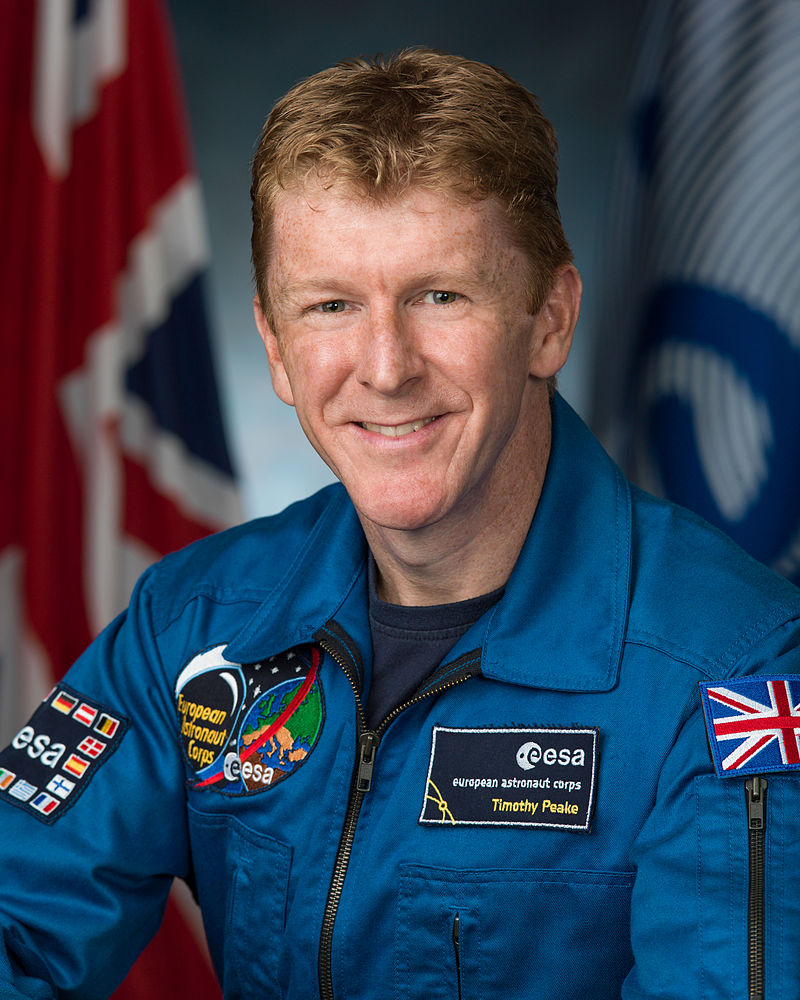
Back in 2008 I wrote a piece about the European Space Agency recruiting for astronauts, including the opportunity for a UK candidate to likely go on a mission to the International Space Station. Of course I applied and for a little while there was the tantalising prospect that I jmight be that first ESA British astronaut who was going to have an out-of-this-world experience. I hadn’t reckoned on a certain Major Tim Peake:
Seven years later, on 15 December 2016 just after 11am GMT, Tim will sit atop a 50m Russian Soyuz FG rocket containing 300 tonnes of kerosene and liquid oxygen. In an incredible rush, he will go from zero to almost 29,000 km per hour, before he can enjoy the tranquility of six months’ zero gravity in low Earth orbit.
Not long after he’d been announced I remember Tim doing a Q&A from the UK Space Centre in Leicester. My question consisted of only two words: “swap jobs?” He laughed but politely declined. If the chance came tomorrow to sneak into the capsule in his place, I’d be there in a nanosecond.
The mission is called Principia, named after Isaac Newton’s book that helped define the discipline of mathematical physics which I studied at Newton’s very own Trinity College, Cambridge. There is no more appropriate moniker for this British foray into space. Reaching low Earth orbit requires a mathematical understanding of gravity and Newton’s Principia laid those foundations, realizing that an apple falls to the Earth for the same reason that the Moon (and the ISS) orbit around it. Every space voyage has a mission patch and here’s Principia’s.
Hoping and expecting everything to go according to plan, Tim will reach the International Space Station around 19.00 GMT and this will be live on TV and the web. If I could be even more envious (in the nicest possible way) it’s because he’s not going for a short stay. The mission is scheduled to last a whopping six months.
While up there, one thing that Tim is extremely keen to do is to perform a spacewalk or EVA (extravehicular activity). The International Space Station is pretty big. You’ll know this if you’ve ever looked for it in the night sky as it passes overhead (there are great apps that tell you when it’s going to be visible from your location and it’s well worth the watch). In fact the station is a little larger than a football pitch (both British and American).
If Tim’s lucky enough to journey outside the ISS he’s effectively in his own miniature spaceship, sculpted to fit a human body. It’s as close as you can get to being alone in the cosmos (unless you wanted to try it without wearing a spacesuit, although that’s not quite as bad as you might think and is described accurately in the Johnny Mackintosh books). To try the suited version yourself, here’s a spacewalk simulation game from NASA.
Speaking of Johnny Mackintosh, while cloaked he flies past the International Space Station at the beginning of the second book, Star Blaze.
Three hundred and forty kilometres above Earth, they passed the space station windows so close that they could see the astronauts inside.
It would be funny to imagine one of those astronauts was Britain’s own Major Tim Peake. To commemorate the Principia Mission, the UK Space Agency has produced a special issue of their magazine (link opens as a pdf).
My plan for 2016 is to blog rather more (not difficult), including my thoughts on how to speed up humanity’s transition into becoming a space-faring species. Tim Peake’s flight is another small step along this giant interstellar highway to a potentially golden future for our species.
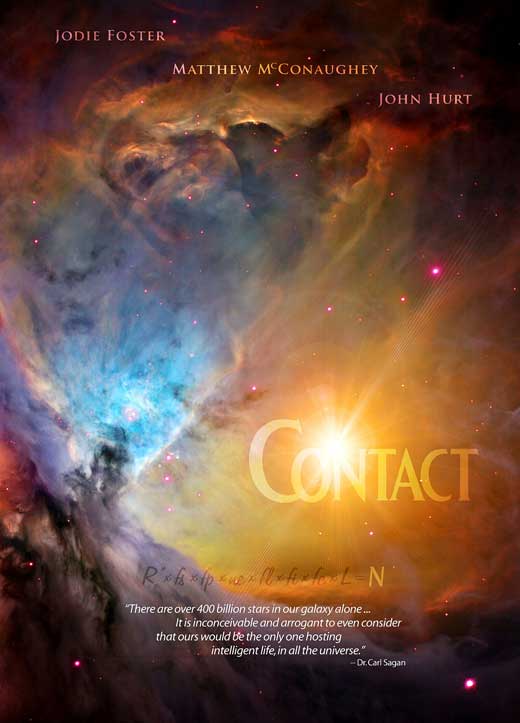
As part of their brilliant science fiction season, last night BFI Southbank saw a special screening of Contact, a movie based on the novel by SETI pioneer, Carl Sagan.
It’s not a short film, but no one in the packed audience minded that the Q&A preceding it, with Professor Brian Cox and Dr Adam Rutherford, took over an hour. Huge credit to my former employers, the British Film Institute, for not making it token, but giving us the chance for a meaty discussion on what many think is the most important question facing science: where is everybody?
This was the question posed to colleagues over lunch one day (in 1950) by physicist Enrico Fermi. It has become known as the “Fermi paradox”. The “everybody” in question are aliens … extraterrestrials.
Why should we care?
Many people think the fundamental moment in the history of Western science was when Copernicus said Earth orbited the Sun rather than the other way around. This wasn’t simply a convenient coordinate shift. It was saying Earth is not the centre of the Universe. We inhabit just one of many planets. We have no privileged position in the cosmos. We are ordinary. The same “laws of nature” that apply on and around Earth apply equally in the rest of the Universe. This has become known as the “Copernican principle” and it is the foundation of scientific thought.
We have a problem. Look out at night – look further through our telescopes (and we can look so very far) and the Universe is vast. There are hundreds of billions of galaxies, like our own Milky Way. Just within ours, there are maybe 400 billion stars, most with planets. Conservative estimates, as Brian Cox told the audience (these are based on Kepler findings) hold that one in ten stars will have habitable planets in orbits that allow liquid water on their surface.
Further, at 4.5 billion years, Earth and our solar system are relatively young. The Milky War is far, far older. inally, mathematical models show it’s perfectly possible to colonize the entire galaxy in a brief time – say, 10 million years. Yet when we look skywards, we see not the slightest evidence if any intelligence in the entire Universe, other than what we find here on Earth. This suggests we are very special indeed – the polar opposite to the fundamental principle of science.
The Arecibo message
Sagan pondered this question long and hard. In his early, pioneering days of SETI, they were actively trying to communicate with extraterrestrials and before the movie, Cox and Rutherford were sitting in front of a radio message intentionally broadcast to the stars.
Sagan also helped designed messages added to the Voyager deep space probes (Voyager 1 is now over 18 light hours away, carrying a gold record with sounds of Earth and a map of how to find its inhabitants). Since those heady days, we think more about “existential risk” – things that potentially threated our survival as a species. One such risk is contact with alien races, so we’ve become more circumspect.
Looking back, I think the novel, Contact, was important for me as both a writer and publisher. I loved the story. It combined so many elements that I’m passionate about and, foolishly at the time I thought I could have told it better! Of course that’s not true, but I would nowadays have been a good editor for Sagan, had he let me. It certainly made me realize I was capable of being a good storyteller, and my current work-in-progress is a novel that revisits this same territory. I find it unfathomable now that I asked Sagan to sign my copy of Cosmos, which he kindly did, but not my copy of Contact – what was I thinking?
The film’s good, but there’s so much more in the book that anyone who likes the movie would get a lot from reading the novel. It was commented that Contact is a little overlooked as a science fiction film. Very true, but with my screenwriting hat on I think that’s because there’s so much to cram in, the narrative is very linear and straightforward. And Sagan’s thoughtful climax may have been unsatistfactory for mainstream audiences used to a different style of alien encounter.
In the movie, scientist Ellie Arroway (played by Jodie Foster and the character Cox and Rutherford said was the best depiction of a scientist on screen) detects a message from aliens, using radio telescopes. This was how Sagan and fellow SETI pioneer Frank Drake expected our first contact with extraterrestrials would go, and the film describes how things might unfold after receipt – the message is written in mathematics, the only universal language. There’s still an old-school SETI community working in this area, but increasingly scientists are thinking of alternative ways to identify evidence of aliens, often in the form of (very) large scale engineering projects such as Dyson spheres or matter-antimatter burners. We’re still looking.
If you’ve not seen the movie, you really should. Here’s the trailer to whet your appetite:
Back when Quercus books was starting out (even before they were called Quercus) I wrote a piece for them as proof of concept for a planned volume called Days that changed the World (to follow on from the successful Speeches that changed the World). In the end it became a book by Hywel Williams. I really liked my sample piece, mocked up for the Frankfurt bookfair, and now, on the 25th anniversary of the fall of the Berlin Wall, I’d like other people to be able to read it.
“Every wall will fall some day”
It was 6.57 pm on Thursday 9 November 1989. In a press conference Günter Schabowski, head of the Berlin section of East Germany’s ruling party the SED (Socialist Unity Party of Germany), was trying to answer a question put by an Italian journalist.
Earlier that day at the Politburo (Cabinet) meeting, the continued hemorrhaging of East German citizens to the West, through the increasingly open borders of its communist allies, had been discussed. It was decided that a system of permits would be introduced to allow travel into West Berlin. It was Günter Schabowski’s role to answer questions at the subsequent press conference, but he had only returned from holiday towards the end of the meeting and so missed much of the discussion. The question the journalist had asked was about this very issue of travel into West Berlin, so Schabowski was handed a piece of paper to help him give an answer. It was a press release intended for publication the following day. No one meant for him to read it out loud but that’s what he did. He was then asked when this would actually happen. Unaware of the proposed timetable he mistakenly announced to the surprised group of journalists before him that ‘this is immediate, without delay’.
‘As far as I know, this is immediate, without delay’ Günther Schabowski, Head of Berlin SED, 6:57pm
Within minutes the news wire services AP (Associated Press) and DPA (the German Press Agency) were reporting that East Germany had opened its borders to the West. The citizens of East Berlin flocked to the crossing points in the Wall hoping to gain access. Outnumbered and unprepared the border guards didn’t know what action to take. Telephone calls to their superiors apparently said ‘we’re flooding’ as they held back the ever-increasing crowds. Finally, around 10.30 pm at Bornholmer Strasse they bowed to the inevitable and opened the crossing. After 10,315 days stretching across 28 years the antifaschistischer Schutzwall (Anti-Fascist Protection Wall), the physical symbol of the Iron Curtain across Europe, had finally fallen.
‘I won’t believe it until I’m on the other side’ unknown East Berlin woman
‘We’re flooding’ East German border police
The 1989 fall of the Berlin Wall was the pivotal moment in a dramatic year across Europe. This followed in the wake of the new philosophies of Glasnost (openness) and Perestroika (restructuring) coming from Mikhail Gorbachev in The Kremlin. The Poles with their powerful Solidarity trades union were impatient for reform and on 5 April the communist government there agreed to hold free elections. In May, Gorbachev came to West Germany to meet with Chancellor Kohl. He informed Kohl that the Brezhnev doctrine was over – that Russia was no longer prepared to use force to control the satellite states that comprised the Soviet Union. At once the government in Hungary announced its intention to begin the dismantling of the Iron Curtain along the border with Austria. The floodgates were open.
East Germans began pouring into Hungary en route to what they hoped was a new life in the West. The scale of the exodus was unprecedented. Some were allowed through into Austria while others who were turned back ended up camping in the grounds of the West German Embassy in Prague in Czechoslovakia.
A weekly peace vigil had begun on Mondays in the East German city of Leipzig. At first the numbers were small, but despite sometimes violent police action they grew. On 4 September there were a thousand demonstrators – by 16 October there were 120,000. Loudspeakers proclaimed their words of opposition throughout the city:
We, the people, demand:
the right to free access of information
the right to open political discussions
the freedom of thought and creativity
the right to maintain a plural ideology
the right to dissent
the right to travel freely
the right to exert influence over government authority
the right to re-examine our beliefs
the right to voice an opinion in the affairs of state
The Leipzig protests
Gorbachev had returned to Berlin as guest of honour for the 40th anniversary of the East German state on 7 October. In front of the Palace of the Republic the celebrations turned to protest as the crown cried out for Gorbachev to help them. The demonstration was broken up by the police with a thousand arrests. In a warning to the SED Gorbachev announced ‘Wer zu spät kommt, den bestraft das Leben’ (whoever comes too late is punished by life). In East Germany this was seen as a tacit acknowledgement that the old order was over. Following Gorbachev’s comments and the ever-increasing demonstrations against him, East German President Eric Honecker, who as late as June had claimed the Wall would last for another ‘50 or 100 years’, resigned on 18 October.
Honecker was the original builder of the Wall. More than two and a half million East Germans had escaped to West Germany between 1949 and 1961, an unsustainable drain on the communist state’s resources. Because of this the first East German President, Walter Ulbricht, had secretly decided a wall must be built. He sought the then Russian Premier Nikita Khrushchev’s permission to make his plan a reality. At midnight on the morning of Sunday 13 August 1961, Honecker, responsible for security on the SED Central Committee and so the overseer of the construction of the Wall, sealed the border with West Berlin while the citizens in the east slept. In preparation for the day he had stored 25 miles (40 km) of barbed wire and thousands of fence posts in barracks around the city. This was brought out and the Wall was erected behind a line of 25,000 armed police, posted every six feet along the border.
The resignation of Honecker saw him replaced by another hardliner, Egon Krenz, but the exodus from East Germany continued apace. On Tuesday 7 November the government of East Germany resigned en masse appealing to the public that ‘in this serious situation, all energies be concentrated on keeping up all functions indispensable to the people, society and the economy.’ The plan was that the ministers would remain in office until a new government could be formed. The next day the entire Politburo also resigned. However, the Central Committee of the SED unanimously re-elected Egon Krenz as leader. That afternoon party members elected a new Politburo who would meet for the first time the following day under Krenz’s leadership. The rapid changes in the administration and personnel were perhaps the reason for Günter Schabowski’s confused announcement on the fateful evening.
As night fell on 9 November a street party spread all across West Berlin that lasted several days. As each East German Trabi drove across Checkpoint Charlie its driver honked its horn and was cheered by the masses. East German border guards joined the celebrations and were presented with flowers by delighted West Berliners. East Germans were pouring into West Berlin with no money, so it was quickly announced that possession of an East German passport would entitle the bearer to free public transport and museum admission across the city.
‘Berlin was out of control. There was no more government, neither in East nor in West. The police and the army were helpless. The soldiers themselves were overwhelmed by the event. They were part of the crowd. Their uniforms meant nothing. The Wall was down.’ From a personal account by Andreas Ramos, a Dane in Berlin
‘Soon after the announcement was made, my family and I went to the wall with hammers and chisels in order to help knock it down. There were hundreds of people there already. I was surprised at just how difficult it was to break a piece of wall off: it was made of such hard material. Looking at gaps which others before me had managed to create, I could see the thick iron wires which were between the concrete layers making up the wall. One thing I did notice about the wall was that the West side was covered in graffiti and the East was perfectly clean: the East Berliners were not allowed near the wall. I had fun knocking away at the wall, and did manage to break of small chunks, which I still have today.’ From a personal account by Louise Hopper, then a 14 year old English girl living in West Berlin
Tear down the wall
The next day, Friday, saw the announcement of free elections in East Germany to take place the following year. Then, on Sunday 12 November, the Wall was opened at the historic Potsdamer Platz (Potsdam Square) by the mayors from each half of the previously divided city. Walter Momper, Mayor of West Berlin proclaimed ‘Potsdam Square is the old heart of Berlin and it will beat again as it used to.’ Six weeks later the historic Brandenburg Gate, was also reopened in front of enormous crowds.
Systematic demolition of the Wall began on 13 June the following year and Germany was finally reunited on 3 October 1990. However, a watching world that had been caught in the grip of the Cold War for so long remembers 9 November 1989 as the day it ended – the day the Berlin Wall fell.
Factfile
Erected: 13 August 1961
Total Length: 96 miles (155 km)
inside Berlin: 26.8 miles (43.1 km)
between Berlin and East Germany: 70 miles (112 km)
Watch Towers: 302
Concrete Shelters: 22
Border Guards: 14,000
Successful escapees: 5,043 (incl. 574 members of armed forces)






 I couldn’t help think of Philip Pullman’s first book in the His Dark Materials series which was called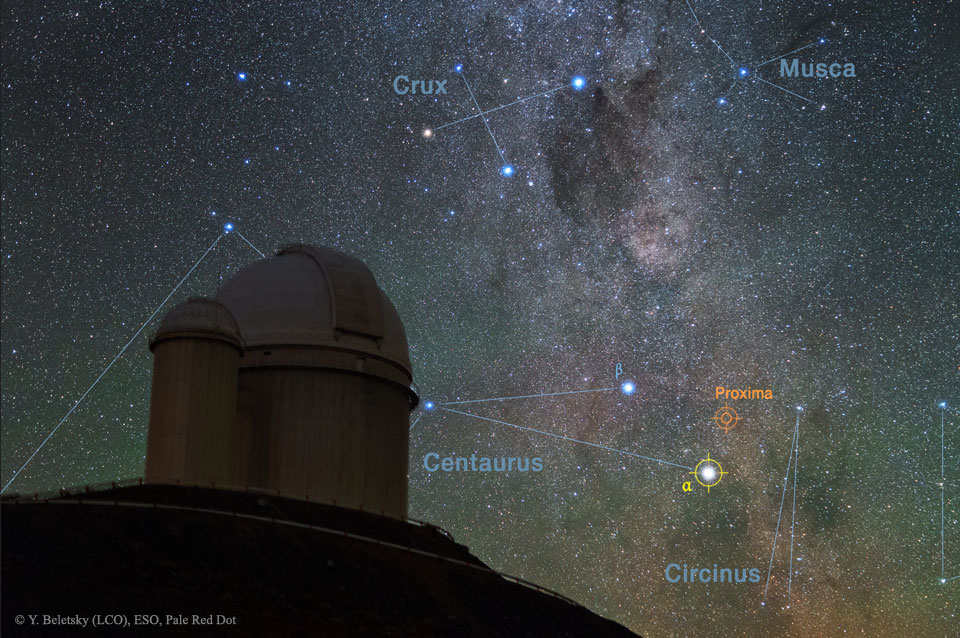




 appropriate moniker for this British foray into space. Reaching low Earth orbit requires a mathematical understanding of gravity and Newton’s Principia laid those foundations, realizing that an apple falls to the Earth for the same reason that the Moon (and the ISS) orbit around it. Every space voyage has a mission patch and here’s Principia’s.


 Subscribe to Keith Mansfield's RSS feed


 Keith Mansfield