Selene at the Science Museum

•January 29, 2009 • 1 Comment

There’s something wonderful about being in a museum after hours. Umberto Eco’s wonderful Foucault’s Pendulum opens with one of the protagonists hiding out in the Musée des Arts et Métiers, Paris. I was once invited to a party to celebrate the opening of a new gallery at the Science Museum in London and was able to slip away unnoticed, exploring the space section of the museum on my own with access never dreamt of during regul28012009-johnny-in-science-museum-shop-w-harry-potter1ar hours.

Last night, the Science Museum held one of its “Lates” sessions, a rather more official way of seeing the museum than my earlier nocturnal wanderings. And I noted, with disappointment, that this time, the route to the Apollo 10 capsule was barred. But it was good to see signed copies of Johnny Mackintosh  beside Harry Potter in the museum bookshop.

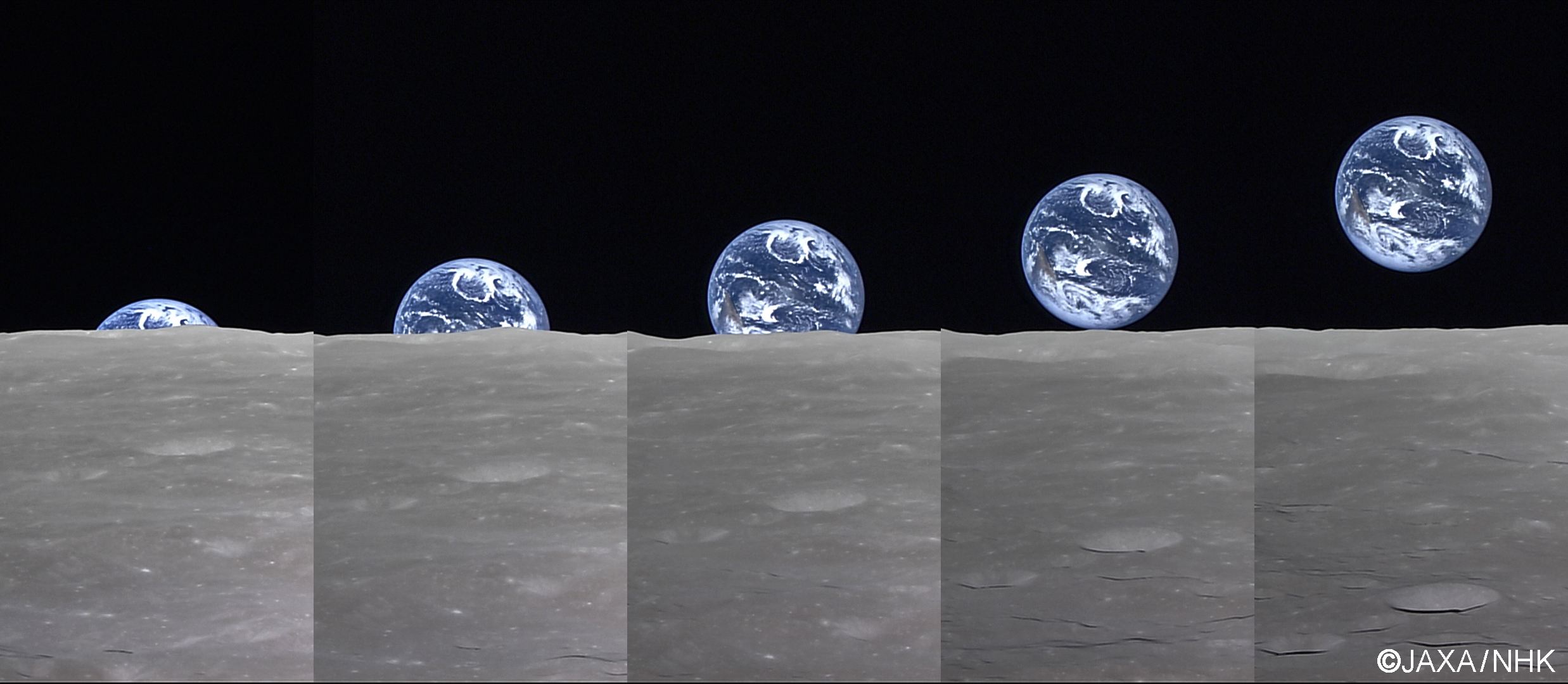
However, while most of the crowds were there to see the Japan Car exhibition, I’d gone along on another of my moon missions – to view the high-definition videos from SELENE, one of Japan’s satellites in lunar orbit.

earthrise-hdtv_039_l

In mythology, Selene is the name of the Greek equivalent of Luna and was a daughter of two Titans. Nowadays, the spacecraft is more often called Kaguya, the name chosen by the Japanese public after a beautiful lunar princess in a Japanese folk story (who rejects countless marriage proposals here on Earth before returning to her original home on the Moon). SELENE stands for SELenological and ENgineering Explorer

Although images from the satellite are high-definition and give a better view of overflying the Moon than we’ve had before, they were projected onto the screen in the Science Museum’s small theatre rather than its giant Imax, and were at the limits of magnification with some pixilation setting in, so still came across as pretty low-resolution. But it’s always a wonderful thing to see Earthrise.

It’s well worth taking a look at the dedicated youtube channel. Sadly, I’m not allowed embed the videos into this blog to give you a taster. The accompanying copy read “the closest you can get to flying over the moon”, but I’d argue that, for the very best Moon experience, you really have to see the Imax film Magnificent Desolation: Walking on the Moon 3D. Now that, genuinely, is just like being there…

All the space images are copyright Japan Aerospace Exploration Agency (JAXA)
AddThis social bookmarking image button

Johnny Mackintosh flies into The Sun

•January 26, 2009 • Leave a Comment

Its The Sun wot won it

Political observers argue over the influence of Britain’s best-selling tabloid. Normally the paper supports the Conservatives and “It ‘s The Sun wot won it” was a famous headline from April 1992 when John Major confounded the opinion polls to defeat Neil Kinnock and give the Tories their fourth straight election win.

Currently, I’m reading The Alastair Campbell Diaries (Arrow Books). Tony Blair and his chief spin doctor went to a lot of trouble to woo Rupert Murdoch and have The Sun on board to support Labour in the 1997 election, which they duly did. Was it The Sun wot won it again?

Now, in 2009, I’m delighted to say The Sun has come out for Johnny Mackintosh and the Spirit of London. I posted a copy of the new paperback to Natasha Harding who reviews books for the paper’s Something for the Weekend section. She sent me a lovely email back saying, “I started reading it last night, and although I’m not your target audience I think it’s great.”

I’m not sure that the paper has the same influence on the book-buying habits of its readers as it claims on their voting habits, but it’s great that they’ve joined the Daily Express in recommending Johnny and Clara’s adventures.

Johnny Mackintosh went into The Sun on Friday 23rd January. The full review reads:

JOHNNY MACKINTOSH AND THE SPIRIT OF LONDON by Keith Mansfield (Quercus, £6.99): Johnny is a 13-year-old who lives in a children’s home. He’s often in hot water for getting up to no good with the help of his dog Bentley.

As well as loving football, the youngster is a techno-wizz which has made him a firm favourite with his peers but not with the staff of Halader House.

When he runs away to find his sister he falls straight into alien hands and is sent into outer space.

In order to escape, he needs to find out who he really is – but could that mean he will never get to go home?

Although aimed at young lads this was a great read and I really enjoyed it.

low-res-natashas-review-croppedIf you click on the image you should see a larger version of the actual piece.

To read all the reviews of Johnny Mackintosh and the Spirit of London, go to the What other people say about Johnny Mackintosh page on the johnnymackintosh.com website. I have to say they’re all lovely and I’m grateful to everyone who’s written about the book.
AddThis social bookmarking image button

Johnny Mackintosh goes Soft

•January 7, 2009 • 1 Comment

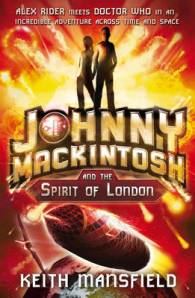
Tomorrow, another milestone is reached in the young life of Johnny Mackintosh. Up until now, you’ve only been able to read about his adventures in one of those beautiful, but slightly bulky, hardbacks. From this point forwards, all good bookshops wil be selling the paperback as well.

Johnny Mackintosh and the Spirit of London in paperback

The soft cover of Johnny Mackintosh and the Spirit of London is every bit as handsome as the original, but also features additional text on the front reading:

“Alex Rider meets Dr Who in an incredible adventure across time and space”

When I first pitched the series to my publisher, Quercus, is was as “Harry Potter meets Star Wars”, but I’m equally happy with their wording and the Dr Who reference admirably captures Johnny and Clara’s time-travelling adventures.

You might notice this announcement is the first entry for a while as I’m still very busy finishing off Johnny’s second story – oh to be able to travel in time myself, taking the manuscript with me, in order to complete it well ahead of schedule.

As I explain in the Science of Johnny Mackintosh, that’s sadly not possible, but I have had great fun during my school visits recently, talking about how any of us should soon be able to take a trip into the far future – but only on a one-way ticket.
AddThis social bookmarking image button

Hounslow Manor School

•October 23, 2008 • 3 Comments

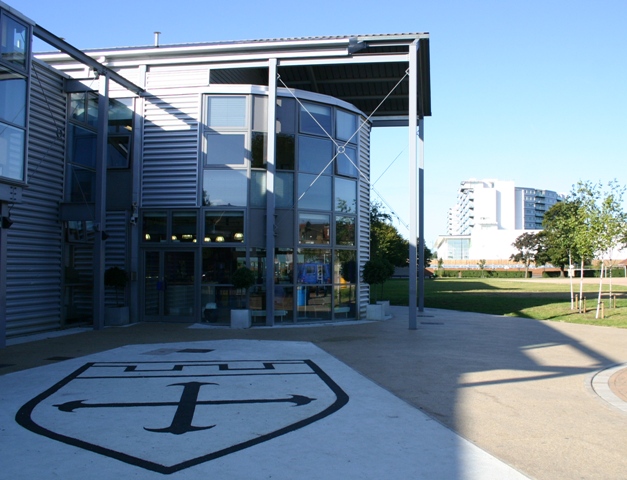
My first ever school visit took me to Hounslow Manor in southwest London. Before last Friday, I confess the thought of facing “the youth of today” en masse made me slightly nervous, but the reality was that I’ve never been in a room with nearly fifty such polite, charming and enthusiastic pupils – certainly not when I was at school.

Before getting started I had five minutes to judge the winners of a poetry competition from a shortlist – this was impossible because the standard was incredibly high. I confess I wimped out and drew the names of the winners from out of a hat but I’d say to everyone whose poem was there, their entries were superb and I’m sure there are some future writers among the finalists.

I began trying to talk a little about story-telling. With a willing volunteer and a couple of trusty umbrellas (doubling as light sabres) I re-enacted the pivotal scene from Star Wars: The Empire Strikes Back to demonstrate the beauty of a plot twist, before also talking about Harry Potter, probably the series that most influenced my writing.

We moved on through discussions of time travel (which clearly happens in Hounslow as some of the pupils had actually met Albert Einstein earlier that very day), the possible location of Atlantis and the existence of aliens. Of course those are all elements of the Johnny Mackintosh story and I hope whetted a few appetites for the book. Then I rushed through a reading of when Johnny (and Clara) are taken into space for the very first time.

The reason it was rushed was because I overran terribly, partly because of all the hands in the air while I was talking to my eager listeners. I didn’t want to ignore possible the best audience I’ll ever have, so I found myself stopping all the time to take questions (which I didn’t feel I did justice to properly). I was asked if there was a moral to my story, whether I’d seen the Transformers film, if you went back in time how could you bring the dead back to life, and zillions more, all of them fascinating and thought-provoking.

Looking back, I probably made the cardinal author’s sin of not saying enough about my own writing and book, so if there’s anyone from the school who wants to ask me a question they didn’t get to pose on the day, or one they felt I didn’t answer well enough, or they couldn’t even get to the talk so missed out on asking a burning question about Johnny Mackintosh and the Spirit of London, me or writing and stories in general, now’s your chance. If you leave a comment on this entry I promise to give you a considered reply.

And, finally, thanks to everyone for being such a wonderful audience.
AddThis social bookmarking image button

The Large Hadron Collider

•September 9, 2008 • 1 Comment

A quick break from my self-imposed exile before I put the “Gone fishing” sign up again.

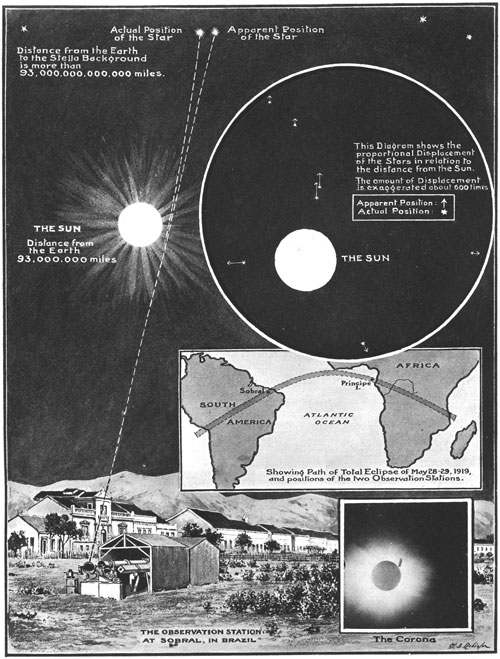
Michelson–Morley; Eddington’s expedition to the 1919 total solar eclipse; Edward Jenner injecting himself with smallpox; Pasteur’s S-shaped flasks; Millikan’s oil drops. If any readers are wondering what this seemingly random collection of words represents, they’re famous experiments in the history of science. Tomorrow sees the addition of another item to this list – the turning on of the Large Hadron Collider at CERN.
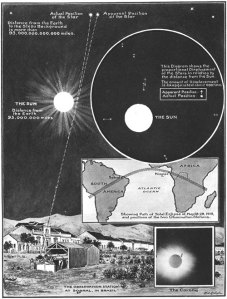
Other than Eddington’s expedition, which left these shores to the island of Principe to verify or disprove the bizarre predictions of Einstein’s General Theory of Relativity (that gravity could bend light), never has an experiment been quite so hyped. Having once applied to CERN for a summer job when I was still at school, I hope it’s understandable if I feel compelled to add my two-penneth.

There have been huge tunnels underneath the Swiss countryside (and crossing into France) for more than half a century. CERN’s where Tim Berners Lee developed the hypertext markup language that made the world wide web possible – the very first webserver was info.cern.ch. It’s a place where many notable scientific milestones have been achieved such as the creation of genuine antimatter in the form of anti-hydrogen atoms – now no longer the stuff of Star Trek. It was also where the weak nuclear force (which governs radioactive decay) was able to be combined with electromagnetism in one of the great steps along the way to that holy grail of physics – the grand unified theory (basically a theory of everything).

It’s hoped that the LHC will be able to explain one of the great asymmetries of the universe – why there appears to be so much more matter than antimatter. Another mystery that nearly everyone has been told about is the possible existence of the so-called “God particle”, the Higgs boson. It’s important because it could help explain why anything has mass at all. When we delve very deeply into the structure of matter, we find that almost all of it is made up of empty space. The once unbreakable atom became a tiny (but incredibly dense) nuclear core with distant, diffuse electrons in shells around it. Then the protons and neutrons that comprised the unbreakable atomic nucleus became made up of tiny quarks. What does it mean to have mass when matter itself is made of next to nothing? If the Higgs boson is found (and its identification is probably within the design spec of the LHC) then its associated Higgs Field provides a possible answer to the puzzle. If you want to hunt for Higgs yourself, try this interactive game from The Science Museum.

Some scientists and philosophers of science believe the process could go on forever – that we can keep dissecting and dissecting smaller and smaller “fundamental” particles. Others think the truth is just around the corner (officially the Higgs boson is the final piece of the jigsaw of what physicists call The Standard Model). In a way this mirrors the debate between the realists and the empiricists. Can scientific theories in some way be judged as “true”, an explanation of how the universe really is, or are they a useful tool that doesn’t claim to be a fundamental reality?

I fully expect the God particle to be found in due course, but I’m not sure how much further the idea of fundamental particles and the Standard Model can take us. Normally I stand in the empiricists camp, but when I step out to become a true blue realist I enjoy the mathematical; beauty of ideas such as Garrett Lisi’s E8-based “exceptionally simple theory of everything”. In this, the Higgs particle comes out of the geometry as just one way of looking at things, and there are others.
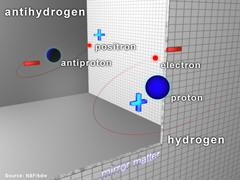
That’s one of the joys of physics. For instance, an atom of antimatter hydrogen can be viewed as having a negatively charged proton (an anti-proton) as its nucleus and a positively charged electron (a positron) around the outside, but it can also be viewed as an atom of regular hydrogen travelling backwards in time. Or you can just look at it through a bathroom mirror.

However you look at the universe, I’m delighted that the fuss about it ending tomorrow has apparently died down. Safe in the knowledge that the Earth isn’t about to be swallowed by an artificially created black hole or than Big Bang the 2nd won’t begin somewhere near Geneva on 10 September 2008, I shall take up my fishing rod and return to the luminiferous ether (disproved by Michelson and Morley) to keep writing Johnny Mackintosh and the Fountain of Time.
AddThis social bookmarking image button

Gone Fishing

•August 29, 2008 • 2 Comments

Apologies that this blog is notable for its lack of updates at present. It’s not that I don’t have numerous ideas with which to swell the blogosphere – the thing is I also have a book to write, so I’m temporarily putting up the “Gone Fishing” sign.

For the time being I need to dedicate all my writing efforts to finishing the second in the Johnny Mackintosh series. And as a treat for those who’ve made it all the way to the end of this apology, I offer a reward of sorts. You can be the first to learn that my working title for book two is Johnny Mackintosh and the Fountain of Time. I hope you like it.
AddThis social bookmarking image button

Vote Johnny Mackintosh!

•August 9, 2008 • 2 Comments

I love elections. This year in London we’ve seen Boris versus Ken, while in the US it’s going to be McCain versus Obama in November. But there’s another poll, happening right now, that you can all take part in – it’s called the Big Science Read.

The Big Science Read was launched at Jodrell Bank, the giant radio telescope that actually features in the second Johnny Mackintosh book. Despite being a feature of the Cheshire landscape for over fifty year, the Lovell Telescope is still the world’s third-largest fully steerable telescope in the world.

The people behind the contest have helpfully divided suggested books into fact or fiction categories. Perhaps because they couldn’t decide whether or not Johnny Mackintosh and the Spirit of London is based on a true story, they’ve left it off their list but you can still vote for it.

I believe it’s important that everyone has some understanding of science, how it works and how to evaluate the reports we see in the media. Ben Goldacre’s Bad Science column in the Saturday Guardian is something everyone should read. With Johnny Mackintosh, I thought it important to infuse the story with as much genuine science as possible, sitting quietly in the background, although never at the expense of the actual story-telling.

My aim was that the book would play a role in inspiring younger readers to discover more about the world (and indeed the universe) around them. I hope the use of science in fiction has worked. If you think it might have done, vote now.
AddThis social bookmarking image button

Book signing in Blackwell’s

•August 3, 2008 • Leave a Comment

I’m delighted to announce I’ll be reading from Johnny Mackintosh and the Spirit of London and signing copies in Oxford’s fabulous Blackwell’s bookshop on Tuesday 12th August (from 3pm). I’ll doubtless say a few words about Johnny before I start and I’ll try to think of an activity to bring along that I can give out to children, maybe with a prize at the end of it.

If anyone doesn’t know, Blackwell’s is the first UK building to make use of time lord technology – it’s a true Tardis. From the outside you’d think it had room for hardly any titles, but venture through the doors and you’ll discover the biggest bookshop in the city. This is partly due to one of the natural wonders of the bookselling world, the cavernous Norrington Room, which was in the Guinness Book of Records for a while for having the most books or sale in a single room, anywhere in the known universe. For aficionados of the book, it eventually lost its place to the Imperial Library on Melania at the very centre of the galaxy.

The Norrington Room, from the Oxford Information Archive

If you can’t make it down to Oxford, but would like to say hello and get your own signed copy of Johnny Mackintosh and the Spirit of London, you can find out where to meet me in future on the main booksite.
AddThis social bookmarking image button

Water Ice found on Mars

•July 31, 2008 • 1 Comment

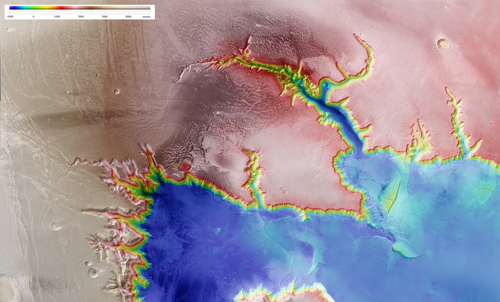
Channel 4 News is reporting that NASA has announced definitive evidence of water on Mars. For years now, images from Martian orbiters have suggested the Martian landscape was sculpted by running surface water. Last month we saw a white substance exposed by the Phoenix lander’s robotic digger, only to evaporate away as the days went by. Now, samples collected by the scoop have been analysed in the space probe’s ovens. The chemical signature is apparently clear.

False colour image of Echus Chasma courtesy of ESA

This is great news for the future. One of the main obstacles to a human Mars mission can now be overcome, as the people landing on the red planet won’t have to take water with them to live there. It’s waiting for them to make use of. The other major obstacle is how to get back. Perhaps a question that should be asked is do they need to? Throughout history, there have always been people prepared to leave home, crossing oceans, knowing they would never return. I expect there would be plenty of volunteers prepared to settle a new world, even if for now it’s a one-way journey.

That’s probably the subject of a longer, more thought out blog entry. For now, we may not be sure there’s life on Mars, but at least we know there’s ice on Mars and that should be the subject of great rejoicing.
AddThis social bookmarking image button

All About Eve

•July 30, 2008 • 1 Comment

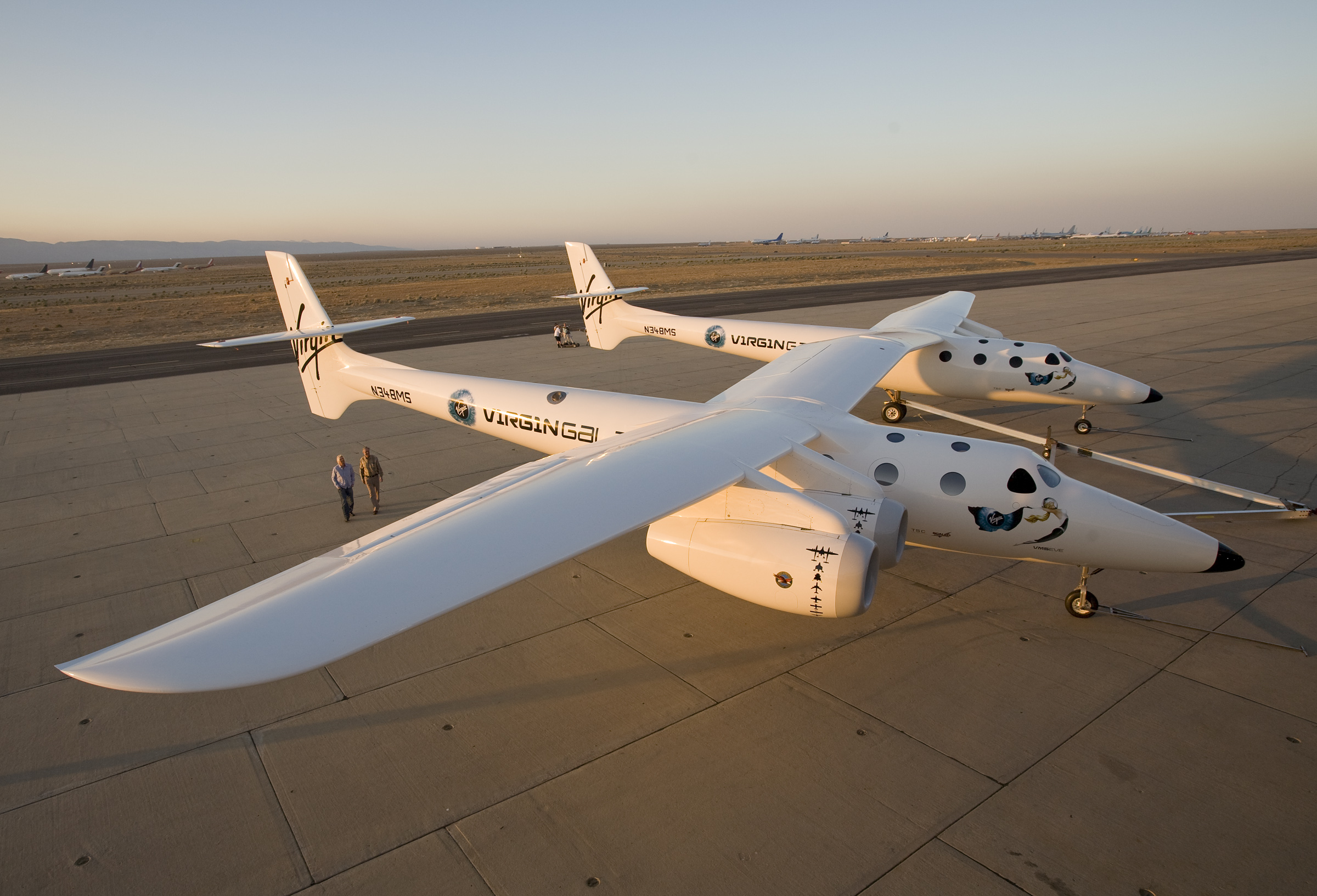
It’s always been my hope that humanity can embrace a glorious future among the stars. I just wish we’d get a move on. Thankfully, on Monday Richard Branson’s Virgin Galactic opened the hangar doors to reveal WhiteKnightTwo, the launch vehicle that is intended to begin the sub-orbital journey for passengers aboard SpaceShipTwo in eighteen months’ time.

Until recently, space travel was the sole preserve of governments, and very few of those at that. Then came the Ansari X Prize offering $10 million for the first ship to reach an altitude greater than 100 km twice in the space of a fortnight. Many teams took part, but on 4 October 2004 it was Burt Rutan’s Scaled Composites that took the money with SpaceShipOne.
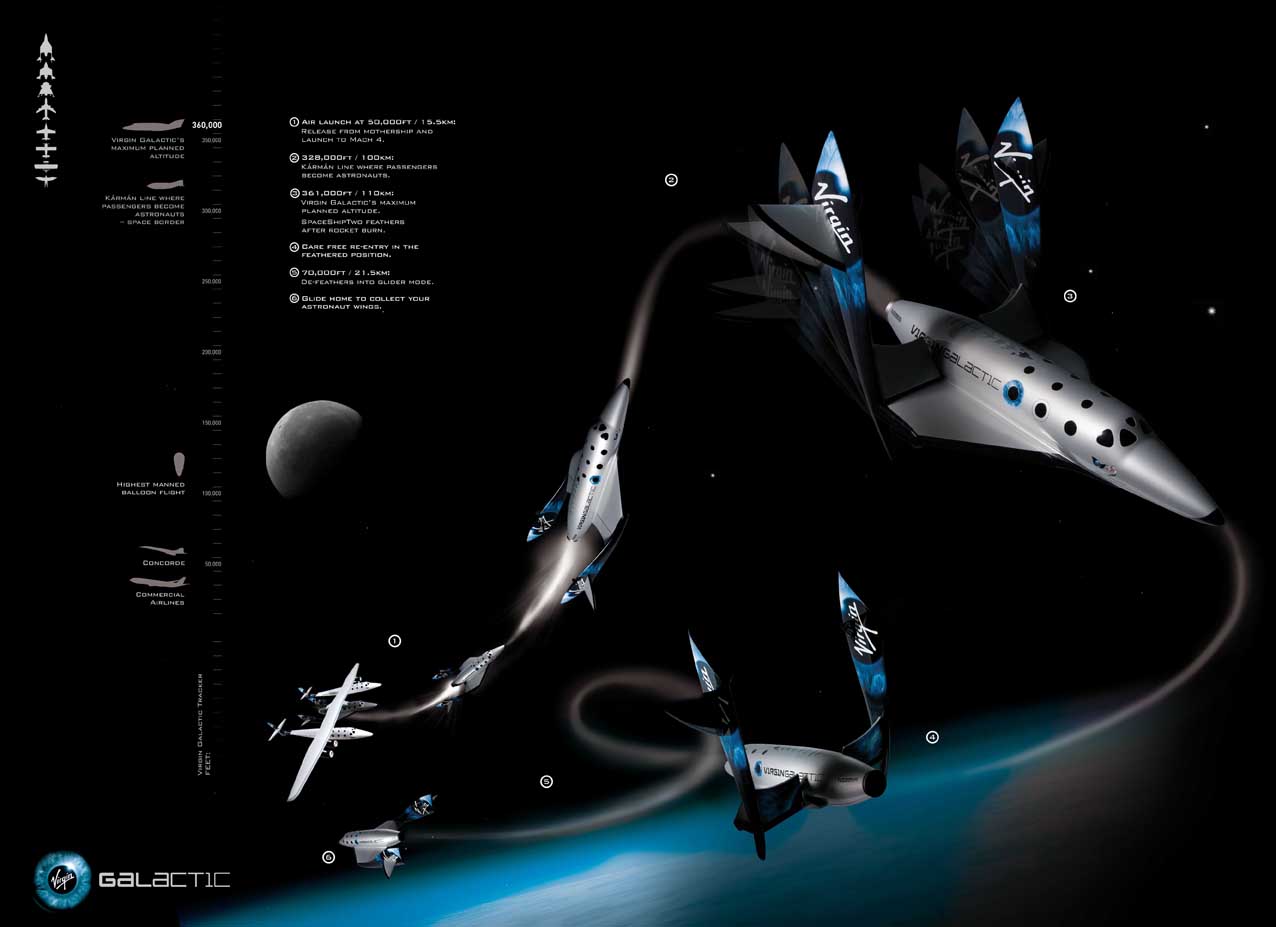
Branson and Rutan teamed up; fast forward four years and for the princely sum of $200,000 you can buy a seat along with two pilots and five fellow passengers that will give you a view of the curvature of Earth from space and about five minutes of weightlessness. And let’s not forget the rush of the launch and then the glide back down to collect your spacewings.

SpaceShipTwo is still in the hangar, apparently 70% built, but WhiteKnightTwo is expected to begin flight tests later this year. It’s like a catamaran for the skies, with two hulls that between them will carry the space vehicle to a height of 15 km before its hybrid rocket engine lifts it to sub-orbital altitude. At first, Virgin Galactic aim to manage a flight each week, but when everything is up and running at full capacity there should be four flights a day from their New Mexico spaceport.

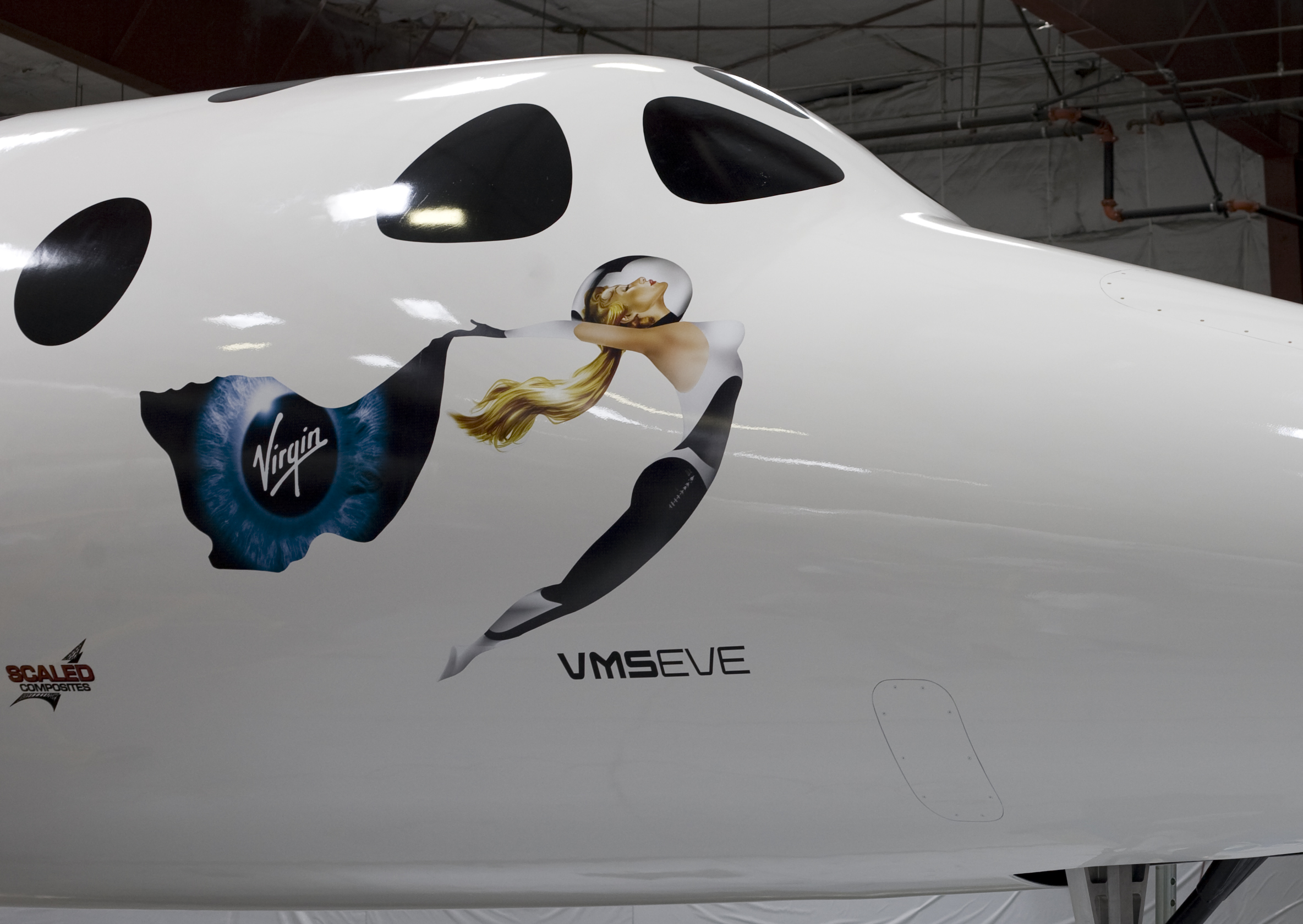
Branson’s mother officially christened the launch vehicle – it was named “Eve” after her, as well as symbolizing a new beginning for space exploration (let’s hope Apple stays well away from the computer systems). WhiteKnightTwo could also herald a new age in more traditional aviation, being the largest all carbon composite aircraft with the huge benefits in efficiency that promises.

Apparently more than a hundred future Virgin Galactic astronauts are fully paid up and ready to fly. My name officially went on the list on 28 September 2004, but they’ve still not asked me to show them the money. Maybe, if my astronaut application with the European Space Agency comes through, I won’t have to.
AddThis social bookmarking image button