A New Earth and the Missions to Mars

•February 4, 2012 • Leave a Comment

I realize I’m privileged to have access to some of the world’s cutting edge science, but last week was particularly special with a visit to University College London to hear a mixture of astrophysicists and astrobiologists talk to journalists about their cutting edge work,organized by the ABSW, the Association of British Science Writers, of which I’m a member.

Now we all know scientists can sometimes waffle, but this brave half-dozen weren’t allowed that luxury. The format for the talks was a pecha kucha – born in Japan, you have 20 slides, each lasting for exactly 20 seconds, to get your point across. That’s 6 minutes, 40 seconds (and not a second more) to say who you are, what you do and pitch for a place in the science columns of Britain’s newspapers.

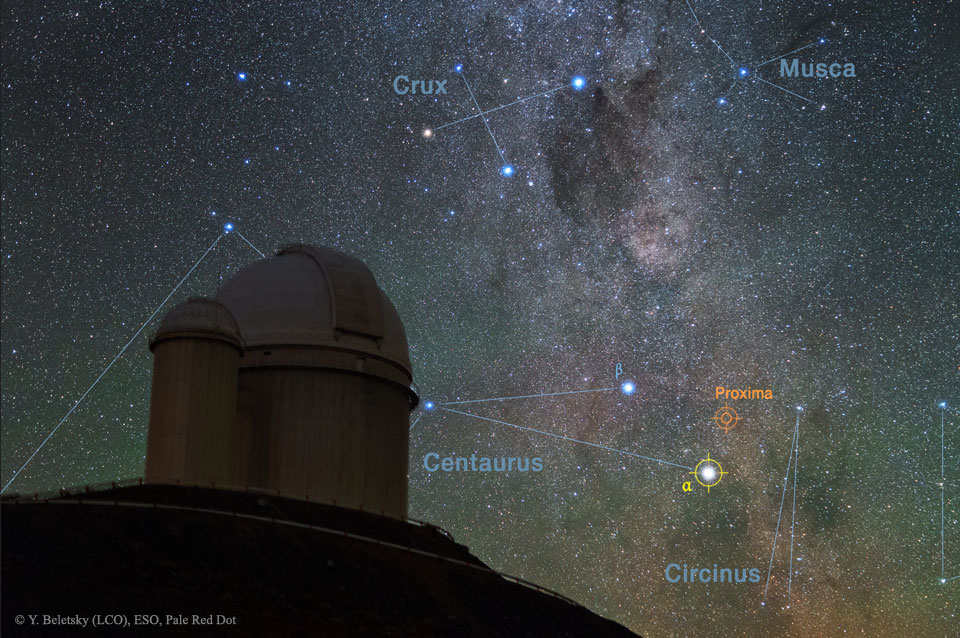
First up, Giovanna Tinetti asked what exoplanets are actually made of. For those out of the loop, exoplanets are those orbiting other stars, far beyond out own solar system. We weren’t sure such things even existed until the 1990s, but nowadays there are more than 700 confirmed cases, with hundreds more candidates awaiting confirmation. recently some astronomers have gone so far as to sayy that every star in our galaxy must have planets orbiting.The most productive way to search for these faraway worlds is by using the Kepler Space Telescope. Looking back along a populous spiral arm of the Milky Way, this other Hubble is a study in concentration, staring fixedly at a single window on the stars, watching for the most minute variation in their light. And by analying this light – the chemical clues hidden within the spectra, scientists like Giovanna can tell what planets hundreds of light years away are made from. She’s looking for those that are habitable. Soon, New Earth need not be a thing of science fiction stories, especially if Giovanna’s plans for ECHO, the Exoplanet Characterisation Observatory, are approved by ESA (the European Space Agency).

Ofer Lahav, Professor of Astronomy at UCL, chose to talk about dark energy, the mysterious entity that apparently makes up three quarters of out universe, but which we didn’t even know was there until 1998. For me the most incredible, unexpected discovery of the last fifty years has been that the rate of expansion of the universe is increasing. No one expected this. Everyone wants to know why, but Ofer was impressively agnostic in his views. Either an entity we call dark energy permeates space itself, acting as Einsteins cosmological constant, or the best theories we have are very wrong. Once upon a time our best theory was Newton’s, but it couldn’t explain why Mercury orbited the Sun the way it did. Along came Einstein, General Relativity and a revolution in science. With the dark energy anomaly, are we on the cusp of another such paradigm shift?

Next, how would you rate a snowball’s chances in hell? According to Geraint Jones they turn out to be a lot worse than a comet grazing the edge of the Sun. In December (2011) Comet Lovejoy’s trajectory sent it plunging into the Sun’s corona. Now comets are pretty much snowballs and our star is one of the hottest things around. Because of that, few astrophysicists expected to see anything reappear on the other side, but that’s exactly what the plucky comet did.

Astrophysics moved to astrobiology and Peter Grindrod talked about the Mars Science Laboratory, otherwise known as Curiosity. Given that NASA’s superprobe is currently en route to Mars with my name and also Johnny and Clara Mackintosh’s recorded on its microchips, I rather thought I knew all I needed it about this mracle of interplanetary engineering. Not so. it turned out I was very light on where Curiosity is going and exactly why. The Gale Crater reveals strata twice the height of the Grand Canyon, a timescope through which to observe millions of years of Martian geology. We even got to look at the view using 3D glasses.

I’m sure Claire Cousins would like to go to Mars, but she’s looking for analogues of the Red Planet here on Earth. If we can find local places that are similar we can test our robotic Martian explorers and see close up how they perform. So, despite being based at Birkbeck and UCL she’s a frequent visitor to glaciers and volcanoes in Svalbard and Iceland. it’s a tough job, but someone has to be an astrobiologist. Claire’s working on the joint ESA/NASA ExoMars mission – I’m hoping that in a few years’ time might also carry Johnny Mackintosh to  our near neighbour, where it will proceed to drill into the red soil, searching for the elusive evidence of life on another world.

So is there life on Mars? It’s no small affair to most of us and Lewis Dartnell continued the theme, talking about extremeophiles, the super bacteria that survive on Earth in places almost every bit as hostile as the Martian dunes – places such as the dry valleys in Antartica. Become an astrobiologist and, even if you don’t get to the stars you’ll certainly see some very cool places on Earth. You don’t imagine drought on the Earth’s southernmost outpost, but these valleys have less rainfall than the Sahara Desert. For a long while we assumed nothing lived there, but now we know better. Step forward, Conan the Bacterium! If such lifeforms can survive freezing temperatures and minute quantites of water here, surely we will soon find similar examples on Mars.

My mind buzzing it got better as Geraint, Peter, Claire and Lewis joined me down the pub to continue our other-worldly discussions, freed from the limitations of 6 minutes, 40 seconds of PowerPoint presentations.

Spotlight Kid at the Hoxton Underbelly

•October 28, 2011 • Leave a Comment

In June of this year I found myself knee deep in mud, struggling from my Glastonbury tent towards the faraway, more interesting areas of the vast festival site. I could go no further, marooned in the one place you don’t want to get stuck at Glastonbury – the dance field (well, I suppose the inside of the portaloos might be worse). Yet here, in this foreign field, I somehow zeroed in on one corner where richer sounds were concealed, chancing upon the BBC Introducing Tent. And there I discovered Spotlight Kid.

That was how I came to be at the Hoxton Underbelly last Friday. Sometimes people describe me as “lucky” so I suppose it was no surprise that, having discovered a great new band originating from my home town of Nottingham, I would swiftly find them playing just round the corner from my adopted Spitalfields. After the fates had conspired, it would have been rude not to attend.

Rude, but possible. There was a parallel invite from ITV to spend the night in the Jonathan Ross green room (the real one rather than what you see on stage) with Noel Gallagher (who did so much to revive British music at its most dead), Michael Sheen (who did a magnificent portrayal of the great Cloughie himself) and Miranda Hart (who did so little to win all those comedy awards) but I reasoned I can go to Wossy any week when he’s filming. But then there was an also a British Sea Power  gig at the Barfly in Camden and they are quite possibly Britain’s absolute best band, but I have seen them maybe a dozen times before. Nottingham’s finest won out.

This year I’ve been invited to see Muse in the private Wembley box of the head of Warner records, stood on the very front row for U2 at Glastonbury and even had to step in as John Taylor’s body double for Duran Duran (I told you I was a lucky so-and-so), but it’s this sort of gig, down in the basement of a small club with an energetic hungry young band that will always excite the most.

Spotlight Kid (the Spotters on Tour) had support: the long running order comprised four hungry bands, but I missed the first (apologies to La Bete). Next up came three-piece Alphastate, with singer Ani announcing it was her birthday. She sang well, but spoke quietly and moved little, but I liked her dreamy folky vocals. And that she asked if anyone had been lucky enough to get Stone Roses tickets earlier in the day. I’d booked my place at the reunion gig so raised my glass to her and cheered, and embarrassed myself as I was the only one in the whole of the Underbelly in that fortunate position.

After Alphastate came four-piece Faults (in the unusual position of having a female drummer). They had what I thought were excellent songs,  but the Hoxton-fin-crowned lead singer’s voice was just one you really didn’t want to listen to for any time at all and the (excellent) guitarist squeezed every note with the emotion and anguish of forcing a number two. Half the audience seemed to comprise family or friends of the band, so you clapped on pain of being beaten up. Bizarrely the other half was largely made up of minute women, presumably swelling the crown to make pint-size Spotters singer Katty Heath feel more at home.

Katty’s pronounced “Cat” rather than “Kate”. I know because I asked at the beginning of the evening, finding her all glittery eyed selling CDs and T-shirts in the middle of the bar. That’s another thing about proper working/touring bands – you can talk to them properly, except when you get all tongue-tied despite being a professional wordsmith like me. But she is very cute and all smiles. And just when you think she can’t get any more perfect, you notice the Johnny-Mackintosh-style Starmark tattoo on her right wrist. It would have been rude not to buy a CD and in fact I found myself asking for two.

In the twenty-three years before I left Nottingham permanently I don’t recall any decent music coming out of the city. One band (Krush) made it to number three in the days when the singles chart mattered, and I think they even DJ’d at The Garage, a presumably long-defunct Lacemarket club where I spent most of my weekends, but House Arrest really wasn’t my cup of tea. I moved to Oxford and fell into the “Happy (Thames) Valley” Shoegazing scene made all their own by the once-mighty Ride, with support from Chapterhouse and Swervedriver and Lush and Curve. Back in that muddy Somerset field I felt I’d hit upon the new Ride, but with more ethereal vocals. And unlike Alphastate, Spotlight Kid are all energy on stage, Katty pumping her air guitar for all it’s worth.

But Spotlight Kid are much more than their female singer. They’re a six-piece of sweltering guitars, building a wall of subtly crafted noise and with vocals and energy also coming from Rob McLeary, an effortlessly thin guitarist with spectacular hair and a penchant for taking his guitar into the audience and climbing onto the sound desk. He told me he was from Arnold and he looked it. Your eyes are drawn to these two but the band are very tight, with Chris Moore and Karl Skivington also on guitar, Matt Holt on bass and Chris Davis bashing away behind them. Space was limited. I thought I’d caught Katty on video accusing the others of touching her bum but the phone failed so instead you get a video of a track from their new album Disaster Tourist. This is “Forget yourself in me” (I might be wrong but I think it would make life easier for Katty in all that wind if she got a shorter veil):

The Spotters are endearingly proud of their visuals and I guess must have spent a lot of time putting them together. I thought this meant that the occasionally bitty nature to the night was because, between every song Katty had to get down on her knees and play with a laptop to call up the next vid. But she reliably informs me it was just to have a swig of water before belting out the next number!

The setlist is short and well crafted, as yet without an encore. Is that because Spotlight Kid haven’t yet found their breakthrough song that might see them sitting in the Jonathan Ross green room? Or are they just modelling their appearances on Jesus and Mary Chain/Strokes/Vaccines (take your pick)? I hope the former. Next time they’re gigging, treat yourself – I hope London doesn’t have to wait too long. What we heard was:

Plan comes apart

Forget yourself in me

Can’t let go

April

Creeps

Reason

All is real

Seefeel

Haunting

During the final number, grasping her tambourine tightly, Katty made her way back to the CD stand to sell merchandise with the promise of kisses for purchasers (sadly I could hardly buy more) while Rob vaulted onto the bass drum, only to fall backwards into the drum kit – I wasn’t sure Chris was terribly amused.

Ides of March Premier

•October 23, 2011 • Leave a Comment

I’ve always disliked The West Wing, primarily because it peddles the myth of brave and decent politicians, always doing the right thing in difficult circumstances. In reality I suspect the public prefer not to think about the dirty deals and corrupt and seedy goings on behind closed doors, which makes The Thick of It more my cup of tea – maybe that’s the UK/US divide? Of course I’m not saying most politicians don’t enter the fray with the best of intentions, but they universally seem to disappoint and the longer they hang around, the more they disappoint. Power corrupts. Even the scent of power corrupts.

So full marks to Ides of March for telling the down and dirty, shabby story of how politics always seems to turn out. Last Wednesday I joined George Clooney, Philip Seymour Hoffman and Evan Rachel Wood on the red carpet for the UK premier. To really appreciate a movie, I try to read as little as I can about it beforehand, so I can watch at face value. Because of that I can admit my ignorance by believing we were likely to have some kind of retelling of the Julius Caesar story (by coincidence the play I studied for my O level Shakespeare), so I entered the Odeon Leicester Square confident of making the necessary connections between the film and the Bard. Not a bit of it.

The bfi (the British Film Institute in official lower-case letters) is a great institution and a former employer of mine, but their organization often leaves a lot to be desired. I ended up being sent to various spots around central London to collect my tickets, meaning I only reached the red carpet about one minute before curtain up. I ran past George Clooney being interviewed without noticing, sat down in my seat and then saw the whole shebang being projected on the cinema screen.

As part of the bfi London Film Festival, my old colleague Sandra Hebron (it’s her last year as Artistic Director of the LFF) called Clooney up on stage where he proceeded to share a few jokes and introduce various cast and crew. Then the curtains parted and we were treated to 101 minutes of an intriguing thriller, even if the expected links to Shakespeare were missing.

This is the fourth film Clooney’s directed. In front of the camera he plays Democratic presidential candidate Mike Morris, Governor of Pennsylvania and leader in a two-horse race with a Senator from Arkansas. What I loved about the movie was that it’s not The West Wing – it shows just how sordid the realpolitik can be, and all credit to Clooney he’s right at the heart of it. The Ides of March of the title refers to the date of the key Ohio primary, which will fall on 15th March and help decide the contest.

The US Primary system has always seemed flawed to me because (in my doubtless limited understanding) it seems anyone can get to vote to decide the preferred candidate. All well and good if it’s only people supporting the party concerned, as they have an honest interest, but I’ve always thought the other party (in this case the Republicans) should rally their voters to support the weakest opposing (in this case the Democrat) candidate. That’s what’s happening in Ideas of March, and it’s embraced by Paul Giamatti’s Tom Duffy who’s campaign manager for the underdog from Arkansas because he thinks it could win them the White House.

Morris’s campaign team is led by the always-brilliant Philip Seymour Hoffman as Paul Zara, working alongside second-in-command Ryan Gosling’s Stephen Meyers. There’s also intern Evan Rachel Wood as Molly Stearns. Her dad is  leader of the Democrat National Council so she has all the right connections to land a temporary job in the campaign office.

In the main the movie follow Gosling’s Meyers in a magnificent performance. His (and our) knowledge of what’s going on around him is limited and he has to act as he sees best given the circumstances he finds himself in. The best of the screenplay is the flirting between Gosling and Wood, and Clooney’s West Wing-esque campaign interviews and speeches. I bet there are plenty of real-life Democrats wishing they had screenwriter Beau Willimon as a speech writer.

When you’ve grow up with the sickening bullying spin doctoring of real-life Alistair Campbell or his celluloid double Malcolm Tucker, you get the feeling Zara should have been far more on top of things and people than appears to be the case, which is one of the weaknesses of the movie, and much hinges on a meeting between Meyers and Duffy that seemed very innocuous to me. But if you can get over those two creaks in the story the rest of the film unfolds to give a real humdinger of a thriller and one of the must-see movies of the year.

The Trouble with Neutrinos

•September 25, 2011 • 1 Comment

The science and even the popular press are filled with excitement at the moment after the OPERA experiment at Europe’s giant particle physics laboratory, CERN (to which I applied for a summer job when I was 16, but that’s another story). Apparently, neutrinos sent from CERN and captured at Italy’s INFN Gran Sasso Laboratory about 730 km away are arriving faster than scientists thought physically possible – faster than the speed of light travelling in a vacuum.

I had to write about this because the news reporting has really annoyed me. Every announcement has said that Einstein might be wrong because he (special relativity) says nothing can travel faster than light in a vacuum. Poppycock! (As I’m being polite.) What the theory says is that nothing that has what scientists call “rest mass” can travel at the speed of light – there isn’t any block on things travelling faster. It’s always slightly surprised me that in a discipline where mathematical physicists are used to things called discontinuous functions, I rarely hear of people willing to accept that something could go from “slower” to “faster” without having to “equal”, but it might be possible.

One argument against travelling faster than light is that, although there are solutions to Einstein’s equations, they contain the square root of minus one which we sometimes call an “imaginary” number (as opposed to other numbers that are called “real”). This is a brilliant example of mathematical spin and how it has actually damaged our understanding of mathematics and the universe. There is nothing less real about these imaginary numbers than what are called the real ones. It’s actually by combining both set that we achieve a far deeper understanding of the mathematical and physical universe. But way back when they were first introduced, French mathematician and philosopher Rene Decartes was very distrustful of them so coined the term imaginary as a pejorative description, hoping it would mean they didn’t catch on. He’s got a lot to answer for.

What is a neutrino? Like the similarly named neutron, a neutrino carries no net electric charge (compared with other familiar subatomic particles such as electrons (-1) or protons (+1). Unlike the neutron, the neutrino has almost (but not quite) no mass. Having no charge and almost no mass makes a neutrino extremely difficult to detect.

Back to relativity! Anything travelling faster than light in relativity yields solutions including the square root of minus one which people have interpreted as meaning travelling backwards in time. That’s the reason for the joke that’s currently doing the rounds on the twittersphere:

Barman: “I’m sorry, sir. We don’t serve neutrinos in here.”

A neutrino walks into a bar.

The idea of time travel in physics isn’t as unusual as nonscientists might think. In fact travelling into the future is completely straightforward and not disputed. Even if the time comes when relativity is superseded by a better theory, it will have to allow for the possibility of time travel into the distant future as we know full well how to do this (you just move very quickly) and have demonstrated it experimentally. However, as I mentioned in a recent article on the Johnny Mackintosh website, we can consider an antimatter particle to be the same as a particle of normal matter but travelling backwards in time – that’s how a notation called Feynman Diagrams actually work.

One of the reasons relativity came about was due to the unexpected results of the Michelson-Morley experiment back in 1887 which showed the speed of light didn’t vary, even if you changed the way you yourself were moving. Could it be that people will look back on these OPERA results in a similar fashion? Although we can’t yet rule it out, I doubt it. Nowadays we realize that there is an amount of uncertainty in every observation and experiment – statisticians possibly occupy the most pivotal role in the interpretation of results. And in an experiment such as this which is so incredibly complex, there are a lot of uncertainties that have to be quantified. It only takes the most fractional error somewhere for these results to be off by enough to bring the results back into line.

For instance, CERN can’t make the neutrinos in short enough bursts that there’s a gap between them leaving Switzerland and arriving in Italy (so they use statistical methods to infer which are which). Then the neutrinos don’t actually travel round the Earth – they go through it – so we can’t directly measure the distance they travel. We use light to measure distances accurately around Earth by bouncing it off satellites, but the speed of light is only constant in a vacuum – it is slowed down in different media and by different phenomena so it becomes hard to measure this distance as precisely as we want. And how can we know exactly how far away the satellite is. In fact I’ve just published a book on a technique called Nonlinear Filtering that tries to answer these sorts of questions and will be a technique the CERN scientists have used. And then, probably far more important, there are delays in electrical circuitry and clock speeds.

But it’s brilliant that CERN has released the conundrum – it shows a problem in action and is especially brave because everyone thinks the results are almost certainly wrong. I applaud them for asking the world to scrutinize this when they couldn’t find the error themselves and, whatever the final outcome, new things will be learnt as a result. And it’s always a great day when theoretical physics makes it into the news bulletins.

Tall Tales and Short Stories

•September 8, 2011 • Leave a Comment

Ever wondered how to get ahead in advertising? Upon leaving university I tried and failed, but have always had a love of the ad world. Here’s a piece I wrote for Tracy Ann Baines’ blog, Tall Tales and Short Stories. The blog’s a really impressive piece of work and is now ranked in the UK’s Top 10 Children’s Literature blogs. My little article is about structure, using one of my favourite ever commercials as the example, and is called Storytelling in 60 Seconds.

The Book Zone, Quercus Blog and Harry Potter

•August 31, 2011 • Leave a Comment

It’s ultra busy the day before publication of Johnny Mackintosh: Battle for Earth.

On the Quercus Books blog (Quercus is my publisher) you can read my post about Doomed Teddy Bear Love.


On the brilliant Book Zone for Boys website you can read another of my posts, this time on the coolest way (we’ve yet come up with) to land on another planet.


Then, over at www.JohnnyMackintosh.com, there’s a piece on Jo Rowling’s and Harry Potter’s influence on the Johnny Mackintosh books.

What are you doing still here? Go and get reading!

Influences on Johnny Mackintosh

•August 21, 2011 • Leave a Comment

With my third novel publishing on 1st September 2011, pop over to the Johnny Mackintosh website for the latest news. I’ll be posting a series of pieces on the influences on Johnny Mackintosh in the run up to publication (and probably just after depending on how quickly I can write them).

Join in the conversation about the new book on Twitter using hashtag #JMB4E.

 
Follow

Get every new post delivered to your Inbox.